Get Full Government Meeting Transcripts, Videos, & Alerts Forever!
Get email alerts on the Infrastructure Drainage topic
No spam. Unsubscribe anytime.
Stratford commission accepts Bruce Brook flood-control plan for review
Summary
The Stratford Inland Wetlands and Watercourses Commission accepted application 24-18 for the Bruce Brook drainage improvements, a multi‑phase project to widen channel sections, create additional wetland storage and reduce frequent neighborhood flooding; the town will review detailed restoration and permitting plans.
The Stratford Inland Wetlands and Watercourses Commission voted unanimously to accept application 24-18, a multi‑phase Bruce Brook drainage improvement project, as a complete application for review at its September meeting.
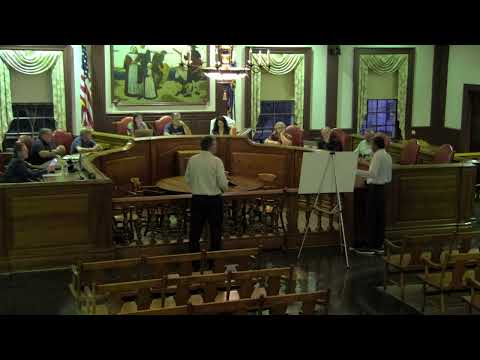
Raju Wasamseti, a professional engineer with Western Sampson and the project manager, told commissioners the proposal would widen sections of Bruce Brook in two phases to increase storage and conveyance where the channel regularly constricts and floods. "We're widening the channel...creating a big bowl of storage," Wasamseti said, describing low‑flow and main channels, cross sections, and a planned natural streambed to support aquatic habitat.
John Casey, the town engineer, said the project had received prior approval in the mid‑2010s but that the permit lapsed and the team refiled with revisions and responses to staff comments. The applicants said two properties in the work area are owned by the Town of Stratford and that portions of the project fall inside neighboring Bridgeport’s jurisdiction; they plan to seek the necessary approvals from Bridgeport as well.
The applicants identified several permits that will be required, including a state Department of Energy and Environmental Protection (DEP) flood‑management certification and an Army Corps PCN permit, and they included a soils scientist report and wetland impact figures in the application package. Wasamseti said some existing wetlands would be impacted by the widening but that the project would create additional wetland area as part of the realignment and restoration work.
Commissioners asked who would be responsible for ongoing channel maintenance and debris removal; the project team said responsibility for the entire channel is currently "a gray area," but that the realigned, open‑channel portion on town‑owned properties would be maintained by the town. The applicants said they had requested an opinion from the town attorney to clarify long‑term maintenance responsibilities.
A commissioner moved to accept the application; the motion was seconded and carried by a unanimous voice vote. The commission will review the detailed restoration plan, including tree removals, planting, and proposed fences and benches, at a future meeting.
Next steps outlined by staff and the applicants include submission of a restoration plan addressing plantings and tree removals and pursuit of DEP and Army Corps permits as required. Portions of the work that lie in Bridgeport will seek that town’s inland wetlands approval.