Get Full Government Meeting Transcripts, Videos, & Alerts Forever!
Get email alerts on the Zoning Regulations topic
No spam. Unsubscribe anytime.
Stratford zoning overhaul presented; hearing continued after residents raise safety, legal and housing concerns
Summary
The Stratford Zoning Commission presented a comprehensive rewrite that condenses the code from 33 chapters into seven and adds rules on accessory dwelling units, multifamily housing, outdoor lighting and renewable energy; public commenters pressed legal, safety and infrastructure concerns and the hearing was continued to Dec. 11, 2024.
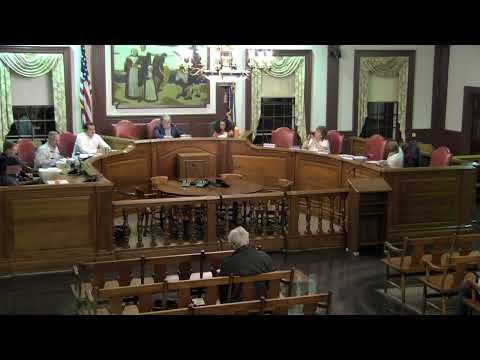
The Stratford Zoning Commission on Nov. 18 presented a comprehensive overhaul of the town's zoning regulations, a rewrite officials say reorganizes decades-old text, clarifies procedures and adds provisions for accessory dwelling units, multifamily housing, outdoor lighting and renewable energy.
Zoning Chair Harold Watson opened the special public hearing and said the rewrite reflects “2½ years of earnest efforts” and was intended to produce “our best future-looking zoning update.” Planning and zoning administrator Jay Hibansky told the commission the project traces back nearly nine years and was designed to align local rules with the town's Plan of Conservation and Development (POCD) and recent state law updates.
Robert Collins of SLR Consulting, the project's code consultant, said much of the existing language was carried forward but relocated into a new structure to improve clarity. “We reorganized it, took the exact language, and put it into a new location,” Collins said, noting the code has been consolidated from 33 chapters to seven to make rules easier to find and use.
Key changes highlighted by staff include a consolidated use table, a central definitions section, clarified site development and administration chapters, and new subsections covering outdoor lighting and renewable energy. The proposed rules would explicitly allow accessory dwelling units (ADUs), including detached units, and expand multifamily allowances to permit three-family buildings in the multifamily zone by adjusting minimum-lot-area and related standards. Staff said notification procedures for abutters and internal referral steps have been formalized in the code so expectations are clear to applicants and department reviewers.
During public comment, a series of residents, technical experts and town officials raised specific concerns and proposed edits. Attorney Ken Cardillo, representing RedBuff Rita Inc., presented written edits and said several provisions appear inconsistent with Connecticut law. Cardillo urged changing a conflict clause he said would allow municipal regulations to control over state statutes and recommended replacing references to “performance bonds” with the statutorily permitted term “financial guarantee.” He also urged using statutes and case law rather than a dictionary to interpret undefined terms.
“Where there's a conflict between those two, we really think that the state statute should be controlling,” Cardillo said, urging textual changes across multiple sections (he cited several code subsection numbers in his submission).
Assistant town attorney Kevin Kelly responded during the comment period that the town's regulations are drafted to comply with state law and defended the use of performance bonds where public interests—such as environmental protections or transfers of land to the town—justify them. Kelly also reiterated that site-plan review is essential to protect public health and safety and to ensure adequate water supply, emergency access and environmental safeguards.
Other commenters pressed technical and safety matters. Tucker Chase, an architect, praised allowance for detached ADUs but objected to a proposed maximum building height for detached ADUs (a 12-foot cap to the roof midpoint), saying that restriction would effectively prohibit two-story detached units and is “too stringent.” Chase also urged clearer lumen, shielding and color-spectrum standards in the outdoor lighting section.
Greg Dancho, chair of the Conservation Commission, and resident Laura Dancho both warned about environmental risks associated with large community septic systems and stressed that multifamily housing should be concentrated where sewer, water and stormwater infrastructure exist. Fire Marshal Robert Daniel flagged EV-charging stations as an emerging safety concern: he recommended against locating chargers in underground garages, urged minimum separation distances from buildings, and asked the commission to request a staff fact sheet on EV charging and fire-suppression needs.
On electric-vehicle parking, a commenter asked the commission to reconsider a proposed 10% requirement for EV-ready parking spaces, calling it cost-prohibitive for some projects; staff said the provision is in the draft but will be part of continued review and public comment.
Several speakers proposed housing-policy measures. Steven Shapiro proposed a workforce-housing overlay concentrated around transit and employment corridors, with deed-restriction terms that would keep units affordable for longer periods; he asked the commission to consider adding that text to the final regulations.
Commissioners and staff emphasized that the zoning rewrite is tied to procedural referrals and state review. Hibansky said the draft must be referred to neighboring municipalities, relevant local boards, and statutorily required state agencies; those responses are due before the commission finalizes any adoption. For that reason the commission left the hearing open and voted to continue the public hearing to Dec. 11, 2024 at 6:00 p.m.
The meeting closed after a procedural vote to continue and a motion to adjourn. Where the transcript did not record roll-call vote tallies for the continuation motion, the commission recorded the motion as approved during the meeting.
Next steps: staff will post department comments and any additional submissions online before the Dec. 11 continuation, prepare a fact sheet on EV-charging safety at the commission's request, and incorporate statutory referrals into the record for further review and possible text edits before adoption.