Get Full Government Meeting Transcripts, Videos, & Alerts Forever!
Get email alerts on the Corrections Funding topic
No spam. Unsubscribe anytime.
Utah House OKs bill changing county jail reimbursement and sets one-time funding
Summary
The House passed HB 282 to revise how the state calculates and pays county corrections costs — moving the state daily incarceration rate to a three-year average and formalizing 70%/50% reimbursement formulas — and included a $7 million one-time appropriation to ease counties’ shortfalls.
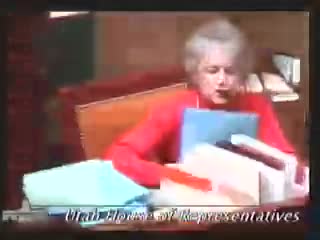
The Utah House of Representatives voted to pass House Bill 282 on Feb. 26, 2008, a measure that changes how the state reimburses counties for housing state prisoners and contract inmates and includes a one-time appropriation to help counties bridge a funding gap.
Representative Michael Noel, sponsor of the bill, told colleagues the legislation modifies the statutory "state daily incarceration rate" by basing it on a three-year average, which he said lowers the current statutory rate from about $72.50 to $68.43. Noel said the change "evens out the highs" and argued the bill also codifies reimbursement formulas that provide 70% of the state rate for contract prisoners farmed out to counties and 50% for conditional-probation prisoners committed directly to county jails.
Noel emphasized counties’ fiscal strain and pressed for long-term ongoing funding, noting the bill includes a $7,000,000 one-time appropriation to help cover reimbursements this year. "We have a $7,000,000 one time appropriation to pay our counties for the condition of probation prisoners and to pay our counties for the contract prisoners that we've obligated to," Noel said during his presentation.
Several members questioned what types of prisoners are housed locally versus at the state prison and whether program availability differs between institutions. Representative Dee asked the sponsor to "explain the difference between contracting, conditional probation and the types of prisoners we might find in county jails compared to what we might find in Draper." Noel responded that many prisoners move through county jails and that programs historically available at state facilities increasingly exist at the county level.
Supporters stressed fairness and fiscal stability for small counties that rely on state prisoners for local jail economies. Representative Brown said the change "creates fairness" and warned that inadequate funding previously had nearly bankrupted small counties when inmates were removed.
Opponents raised concerns about relying on one-time funding and urged the Appropriations Committee to prioritize ongoing support. The sponsor acknowledged the bill itself does not appropriate ongoing funding and said prioritization with appropriations would be necessary in future budgeting cycles.
The House voted to pass HB 282 by voice and roll call; the clerk reported the measure passed the body and it will be transmitted to the Senate for further consideration.
Next steps: HB 282 now moves to the Utah Senate for further consideration and any appropriation decisions tied to the bill would be determined by the Legislature’s appropriations process.