Get Full Government Meeting Transcripts, Videos, & Alerts Forever!
Get email alerts on the Education Federal Agreements topic
No spam. Unsubscribe anytime.
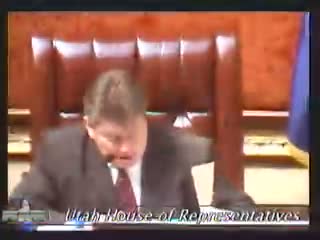
House narrowly backs review rules for federal education agreements after contentious debate
Summary
The House passed Senate Bill 162 requiring gubernatorial and legislative review for certain federal education agreements above specified monetary thresholds; members split 38–33 after extended floor debate about timing and impacts on school programs and higher education partnerships.
The Utah House on the floor passed Senate Bill 162, a bill that requires expanded executive and legislative review for certain federal education agreements that commit state or local matching funds at defined dollar thresholds. The measure passed in a close vote, 38–33.
Representative Hughes, the House sponsor, told the chamber the bill is intended to preserve checks and balances on significant federal agreements that could commit state resources. He outlined tiers of scrutiny tied to cost: smaller agreements would avoid heavy review, while larger agreements would require additional executive and legislative review.
Why it matters: Supporters described the bill as a safeguard for taxpayer dollars, arguing that agreements with material state budget implications should receive legislative oversight. Opponents warned the new review steps could delay acceptance of federal grants and complicate partnerships — particularly concerns about whether higher-education partnerships or time-sensitive federal programs (such as some grant-funded research or Title I funds) would be unintentionally slowed.
Key floor exchanges: Representative Shurtleff and others asked whether the bill would delay federal programs such as No Child Left Behind or IDEA funds; Representative Hughes responded that the thresholds were intended to focus review on larger commitments and that the governor could call a special session to expedite very large agreements. Representative Menloff and Representative McKiff raised concerns about higher-education programs and the absence of a House committee hearing on the Senate bill; Representative Hughes said the State Board/Office of Education had collaborated with the sponsor and argued the bill was clarificatory rather than a substantive policy shift.
Details cited during debate: - The bill sets tiered review thresholds for education agreements tied to cost; debate referenced $100,000, $500,000 and $1,000,000 dollar bands as triggers for different levels of review. - The sponsor repeatedly framed the measure as protecting taxpayer obligations when state or local implementation costs are involved.
Outcome and next steps: After extended questioning and multiple members expressing concern about possible unintended effects on timely grant acceptance, the House passed SB 162 by a narrow margin (38 yes, 33 no). The bill was signed by the Speaker and returned to the Senate for the President’s signature.
Representative Hughes on the floor: “Federal programs that I'm referring to are programs like No Child Left Behind ... Individuals with Disabilities Education Act amendments … which we all are intimately aware of.”
The debate left unresolved questions for some members about the bill’s interaction with higher-education grants and time-sensitive federal funds; sponsors said those issues would be handled through clarifying language and the governor’s authority to expedite review if necessary.