Get Full Government Meeting Transcripts, Videos, & Alerts Forever!
Get email alerts on the Minimum School Program topic
No spam. Unsubscribe anytime.
House adopts conference report on minimum school program; charter cap set at 1.4%
Summary
The Utah House adopted a conference committee report replacing First Substitute Senate Bill 2 with a second substitute that sets a 1.4% cap on charter school new enrollments (about 7,300 students this year), removes certain levy language, and preserves a Senate-funded $400,000 CTE online testing allocation.
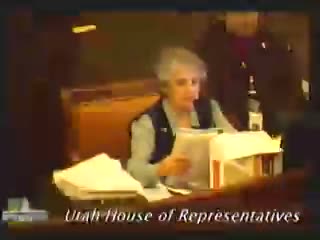
Representative Bradley Last, a conference committee member, moved the House to accept the joint conference committee report on Second Substitute Senate Bill 2, the Minimum School Program budget amendments, and guided members through the principal changes.
Last told members the conference retained all House provisions while making limited technical changes. The bill replaces a fixed charter-cap number with a percentage. “So the percentage that's been set in the bill now is on line 102, it's 1.4%… So for this year, it will be 7,300 new students,” Last said, summarizing the enrollment cap and its numerical effect. He also said language limiting certain levies was removed and that exclusionary language around employee participation in reviewing instructional materials was modified so school-district employees may participate in evaluating whether materials align to core curriculum.
Last noted the Senate carried a $400,000 item for career-and-technical-education online testing but that those funds came out of the Senate budget, not the House. He said most House amendments were preserved.
After debate was waived, the House adopted the conference committee report. The clerk recorded 61 yes votes and 12 no votes; the bill was returned to the Senate for further action.
The House’s action replaces the first substitute with the second substitute and forwards that version to the Senate. Next steps are committee/consideration in the Senate and eventual enrollment and signature processing.