Get Full Government Meeting Transcripts, Videos, & Alerts Forever!
Get email alerts on the School Transportation topic
No spam. Unsubscribe anytime.
House approves school‑bus retrofit and idling‑reduction program to pursue EPA matching grants
Summary
The House passed second substitute House Bill 146 to establish a matching fund for retrofitting school buses and an idling‑reduction education program; sponsor cited health risks from diesel exhaust and estimated retrofit and fuel‑savings figures.
The Utah House passed second substitute House Bill 146 on March 1, creating a state matching fund to retrofit school buses and directing the State Board of Education, in consultation with districts and the Air Quality Board, to adopt idling‑reduction standards and an education program.
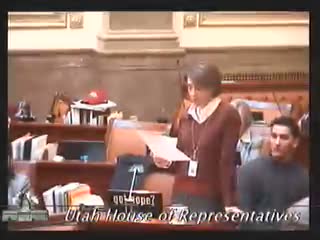
Representative Christine Johnson, sponsor of the bill, said the measure establishes a fund to match federal and private money to retrofit buses in the state fleet built between model years 1993 and 2006. She cited U.S. Environmental Protection Agency findings on diesel exhaust, telling colleagues that diesel engines emit dozens of toxic chemicals and that children are disproportionately exposed while on buses. Johnson described retrofit costs and potential savings: "the cost of a DOC enclosed and a closed crankcase ventilation system ... is only $2,100," and she said reducing idling by just 10 minutes per bus per day could save roughly 35,958 gallons of diesel fuel and over $100,000 a year in aggregate fuel costs.
Supporters emphasized education, retrofitting and voluntary measures rather than mandates. Representative Hendrickson, a former bus driver, said his district already limits idling to five minutes and noted operational concerns in cold weather; Representative McHiff praised the modest appropriation. The sponsor said technical idling‑parameter language had been removed from the substitute and the idling reduction approach would rely primarily on education and district cooperation.
The clerk recorded the bill as passed by the House and referred to the Senate for further consideration; because transcript phrasing around the exact tally was not entirely clear in one line, reporters should rely on the official enrolled copy for the final roll call if an exact tally is required.