Get Full Government Meeting Transcripts, Videos, & Alerts Forever!
Get email alerts on the Education Arts Programs topic
No spam. Unsubscribe anytime.
House approves first‑substitute bill to expand Sorensen elementary arts pilot amid funding questions
Summary
The Utah House passed the first substitute of HB 363 to revive and expand the Beverly Taylor Sorensen Elementary Arts Learning pilot, requiring Utah State University monitoring and district matching; supporters cited improved attendance, scores and reduced bullying while some members raised concerns about prioritizing funds amid a large fiscal note.
The Utah House on the evening floor approved the first substitute of House Bill 363, the Beverly Taylor Sorensen Elementary Arts Learning Program, sending the measure to the Senate after voice and roll‑call action.
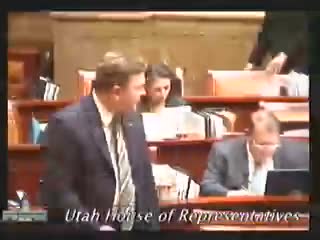
Representative Gregory Hughes, the sponsor, told colleagues the bill formalizes a pilot that integrates arts into core instruction at Title I schools. Hughes said Utah State University will monitor the pilot and annual reports will be provided to the legislature’s interim committees. ‘‘When art was introduced in the core curriculum, it brought attention to subject matter students had not seen before,’’ Hughes said in his presentation, citing classroom visits in inner‑city Salt Lake City schools where teachers used violins and music to teach science topics.
Supporters described local pilot results as promising. Representative King said she had seen programs that used song and performance to teach science and credited the Sorensen family’s earlier financial support for seeding the pilots. Representative Moss and Representative Snow also urged passage, saying the arts programs improved school climate and student engagement.
Representative Mascaro pressed Hughes on the bill’s fiscal note, noting an amount discussed on the floor of more than $7 million and asking whether the Sorensen family would provide matching funds. Hughes said the family will not be contributing cash; required matching would come from participating districts and the bill’s appropriation would come from the Uniform School Fund. ‘‘Prioritization took place in appropriations,’’ Hughes said, adding that committee work reflects the state’s revenue constraints.
Two technical amendments offered by Hughes to clarify relationships between the State Office of Education and the Arts Council and to tighten appropriations language were adopted by voice vote. With the amendments in place, the first substitute passed the House by a roll‑call of 71 yes, 0 no and 4 absent.
The bill creates a monitored pilot intended to measure whether arts integration improves attendance, academic outcomes and student behavior and requires the administration of the pilot and reporting of findings. Next steps include consideration in the Senate and any required budget prioritization.
Votes and next procedural steps: the first substitute of HB 363 passed the House 71–0–4 and will be forwarded to the Senate for further consideration.