Get Full Government Meeting Transcripts, Videos, & Alerts Forever!
Get email alerts on the Legislative Procedure topic
No spam. Unsubscribe anytime.
House advances multiple bills on consent and third‑reading calendars; several measures pass by roll call
Summary
On Feb. 8, 2008, the Utah House moved numerous bills through consent and third‑reading calendars, approving items on elections, education, labor regulation and retirement funding. Several measures passed on recorded votes and were transmitted to the Senate.
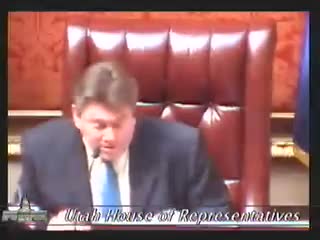
The Utah House of Representatives advanced a slate of bills and committee reports during its morning session on Feb. 8, 2008, approving measures by voice and recorded roll calls that will now proceed to the Senate or to further House consideration.
Clerk reports and consent votes covered administrative and local‑government measures. House Bill 231 (Local Voter Information Pamphlet), sponsored by Representative Douglas Agard, passed and was transmitted to the Senate after the chair announced the vote result: member tally "passes with 68 yes, 0 no." House Bill 261 (Local District Primary Elections), sponsored by Representative Karen Morgan, was recorded as passing with "70 yes, 0 no, and 5 absent." The chamber also approved Senate Bill 60 (repealing certain Labor Commission responsibilities regarding employment agencies) on consent with a roll‑call announced at "69 yes, 0 no, and 6 absent." These consent calendar outcomes were presented by the reading clerk and adopted without extended floor debate.
In addition to consent items, multiple committee reports were adopted and bills were placed on the third‑reading calendar. Committee recommendations adopted included measures across Health and Human Services; Retirement and Independent Entities; Government Operations; Political Subdivisions; Revenue and Taxation; Workforce Services; Business and Labor; Education; and Public Utilities and Technology committees. The reading clerk identified each bill and noted whether it would be placed on a consent calendar, the third‑reading calendar, or referred for further consideration.
Several bills receiving committee-level approval were listed to be considered for second and third reading, and some were transmitted for the Speaker’s signature following the clerk’s announcements. The House recessed for the afternoon after completing the morning’s list of committee reports and votes.
The session’s immediate next procedural steps include transmission of approved items to the Senate (when so indicated) or further floor action per the House calendar.