Get Full Government Meeting Transcripts, Videos, & Alerts Forever!
Get email alerts on the Mental Health topic
No spam. Unsubscribe anytime.
Utah House approves pilot for Assertive Community Treatment teams, 40–34
Summary
The Utah House passed HB101 to create a pilot Assertive Community Treatment (ACT) program for people with severe mental illness transitioning from institutions or corrections; supporters said the voluntary teams could reduce recidivism and inpatient costs despite a fiscal note.
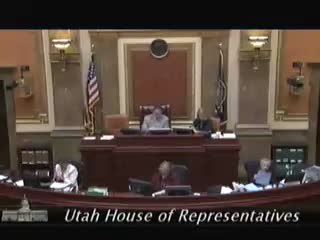
The Utah House of Representatives on the floor voted to pass House Bill 101, the Assertive Community Mental Health Treatment Pilot Program, by a recorded vote of 40 yes and 34 no. Representative Carol Spackman Moss, the bill sponsor, described the measure as a pilot under the Substance Abuse Mental Health Act to provide multidisciplinary ACT teams to people with severe mental disorders transitioning from corrections or mental-health institutions.
"This bill would establish a pilot program within the Substance Abuse Mental Health Act for the provision of assertive community treatment services," Representative Carol Spackman Moss said, summarizing the bill's purpose and team-based model. She told colleagues the teams would be voluntary, wraparound, and intended to reduce emergency, inpatient and criminal-justice involvement for the target population.
Supporters said ACT teams — made up of clinicians, peer specialists and social-service staff — have reduced recidivism in other states and can produce net savings by cutting costly hospital and prison use. Representative Draxler argued the measure was modest in scope and worth testing. "This is a pilot program. This is not a sweeping state program," he said, noting the fiscal note and the potential for Medicaid reimbursement.
Opponents cautioned the House about new mandate risks, rulemaking authority and long-term costs. Some representatives argued pilot programs frequently expand, warned about possible duplication with local services, and urged clarity on whether participation would be voluntary. The sponsor and other proponents repeatedly emphasized that the program is voluntary and that existing local providers could operate the model under fidelity standards.
The bill sponsor and backers emphasized two fiscal points cited during debate: an estimated fiscal note in the House record of about $848,000 and an approximate per-patient operating cost of $10,000–$15,000 annually under ACT models. Supporters said much of the pilot’s cost could be covered by Medicaid and that avoided jail or hospital costs could offset the appropriation.
After a motion to end debate and final summations, the House voted in favor. According to the clerk's reading, HB101 passed the House and will be transmitted to the Senate for further consideration. The transcript shows the final House tally as 40 yes and 34 no.