Get Full Government Meeting Transcripts, Videos, & Alerts Forever!
Get email alerts on the Public Health Smoking Policy topic
No spam. Unsubscribe anytime.
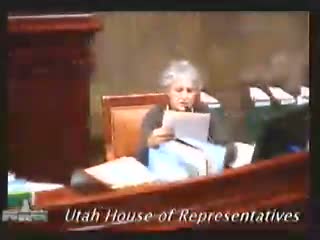
Utah House Recommits Smoking-in-Vehicles Bill after Floor Debate on Enforcement
Summary
After a floor debate over enforcement and personal-property rights, the Utah House voted 39–31 to recommit Senate Bill 14 — which would make smoking in vehicles with children 5 and under a secondary offense with a $45 fine — to the House Law Enforcement and Criminal Justice Committee for further review.
Representative Scott Menlove, sponsor of Senate Bill 14, told the Utah House the measure is aimed at protecting children from the harms of secondhand smoke and would make smoking in a vehicle with a child age 5 or younger a secondary offense punishable by a $45 fine that could be waived if the driver enrolls in a smoking-cessation class. “Children who are restrained in cars have no choice about going anywhere else,” Menlove said, citing health risks and correspondence from the American Cancer Society distributed to members.
The bill’s first floor debate highlighted a split between members who framed the proposal as a child-protection public-health measure and others who cautioned it intrudes on property rights and raised enforcement questions. Representative Noel said regulating smoking in vehicles “seems like an infringement on a personal property right” and urged caution. Menlove and other supporters stressed the measure is secondary — triggered only when a driver is stopped for another violation — and said it was intended to get people into cessation programs as much as to punish.
Representative Wimmer moved to lift SB14 from the Senate third-reading calendar and recommit it to the House Law Enforcement and Criminal Justice Standing Committee, arguing the enforcement community had not had a clear, formal chance to weigh in and that law enforcement should be given an opportunity to evaluate practical enforcement issues. Opponents of the recommit motion, including the sponsor, noted the bill had already had public hearings in both chambers and that members of law enforcement had had opportunities to testify in committee.
After further floor debate about whether the bill would create enforcement burdens and whether the House should resolve the matter up or down, the body called a division and voted. The motion to recommit passed on a recorded vote, 39 yes to 31 no. The House clerk announced the motion carried and that the bill will be referred to the House Law Enforcement and Criminal Justice Committee for additional review.
What happens next: Because the motion was to recommit rather than to amend or defeat the bill on final passage, SB14 remains active but will be returned to the standing committee for law-enforcement review and possible further hearings and amendments before the House would consider it again.
Reporting notes: Direct quotes and attributions in this article come from floor remarks during the House session; actions and vote tallies are taken from the House roll calls announced on the floor.