Get Full Government Meeting Transcripts, Videos, & Alerts Forever!
Get email alerts on the Water Rights topic
No spam. Unsubscribe anytime.
House approves bill limiting water-right forfeiture after lengthy debate
Summary
After hours of debate and failed attempts to substitute the measure, the Utah House passed the second substitute of House Bill 51 to limit administrative forfeiture of certified water rights and extend the nonuse period. Supporters say it protects municipal planning; opponents warned it could create privileged classes and risks of hoarding.
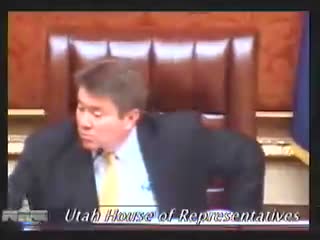
The Utah House voted 67–6 to pass the second substitute of House Bill 51, titled Water Right Forfeiture Protection, after extended floor debate over whether the measure would create a privileged class of water-right holders.
Sponsor Representative Patrick Painter, the bill’s author, said the measure removes an automatic administrative forfeiture procedure and clarifies that a water right can only be forfeited through judicial action. Painter told colleagues the bill lengthens the nonuse forfeiture period from five to seven years and creates exemptions for water held under lease agreements, water conserved for reasonable future public use, and water under certain federal or state contracts. “It removes the automatic forfeiture procedure that’s in our code, and now clarifies that it can only be forfeited by a judicial action,” Painter said during opening remarks.
Why it matters: supporters said the bill protects municipal and public water suppliers that buy and bank rights for long-term planning, preserving investments and allowing orderly growth. Opponents argued the exemptions and 40-year planning language in the substitute risk creating a privileged class of municipalities and large public suppliers that can hold rights in perpetuity, disadvantaging small water companies, farmers and private owners. Representative Ferri, who proposed a third substitute, said his proposal would allow nonuse applications to be filed at any time and establish a task force to resolve outstanding exemptions. “We need to remove the trap so that they can come back into compliance,” Ferri said.
Key provisions and debate: Painter and other backers said the bill applies only to already-certified water rights and does not grant municipalities authority to take other parties’ rights. He also noted that the state engineer’s database and municipal plans provide transparency and that municipal plans would be subject to review. Opponents warned the statutory exemptions around leasing, resale, or holding water for future use could be used to accumulate rights and, under comity principles, could complicate interstate water issues. Several lawmakers declared conflicts of interest because they hold or manage water rights; those declarations were recorded on the floor.
Process: the House rejected a motion to substitute the bill with a third substitute intended to broaden nonuse protections and create a time-limited amnesty and task force. It also rejected a motion to “circle” (postpone) so sponsors and concerned members could meet. After further debate and a sponsor summation, the House opened voting and approved the second substitute 67–6; the bill will be referred to the Senate for further consideration.
What’s next: with passage in the House, HB 51 moves to the Senate for consideration. The bill’s sponsor and several supporters said they expect further review in committee; opponents said outstanding concerns about exemptions and potential market effects should be taken up by either the Senate or a stakeholder task force.