Get Full Government Meeting Transcripts, Videos, & Alerts Forever!
Get email alerts on the Floor Roundup topic
No spam. Unsubscribe anytime.
Utah House advances a package of bills on health, child welfare and public safety
Summary
On Jan. 22, 2008 the Utah House passed multiple bills on third reading, including measures to revise the state digital-health commission, expand expedited parent-time mediation, criminalize knowingly owning vehicles with concealed contraband compartments, and change child-welfare procedures tied to the Adam Walsh Act. All passed bills were referred to the Senate.
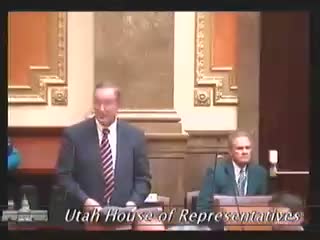
The Utah House of Representatives cleared a series of bills on Jan. 22 as members debated amendments and technical fixes and then sent the measures to the Senate for further consideration.
Among the measures approved, the House passed a substituted version of House Bill 24, amendments to the Utah Digital Health Service Commission Act, which restores the body as a commission and aligns it with the Department of Health. The chamber also advanced House Bill 22, which expands an expedited parent-time mediation pilot into a statewide program and carries a fiscal note of approximately $275,000 plus ongoing costs to fund an FTE, drop-off/pick-up locations, educational classes and indigent mediation fees.
The House approved House Bill 30 as amended, making it a Class A misdemeanor to knowingly possess, use or control a motor vehicle with a compartment intended to conceal contraband. Sponsor Representative Paul Ray said the measure gives law enforcement an additional tool against organized and gang-related operations, while amendments added the word 'knowingly' to protect unwitting purchasers.
Child-welfare measures also moved forward. House Bill 31 harmonizes definitions across multiple child-welfare codes and passed unanimously. House Bill 36, a set of child-welfare amendments intended to address implementation challenges from the federal Adam Walsh Safe Child Act, was amended on the floor to include early-effective-date language and provisions to allow expedited kinship placements; sponsors said the changes prioritize placing children with relatives rather than in shelters and noted an expected fiscal impact that will need funding decisions later in the session.
The House also debated and passed House Bill 60, which changes the process for the legislative review of health-insurance mandates by vesting primary review with the Business and Labor Interim Committee (with deleted limiting language about 'as resources permit' after an amendment). The final vote on HB60 was 60–9 in favor.
Other votes recorded on the floor included: House Bill 22 (69–1–5, passed); House Bill 24 first subject (announced 54–16; corrected record later noted an additional yes, recorded as 55–16–4 for the full subject); House Bill 30 (68–0–7, passed); House Bill 31 (69–0, passed); House Bill 32 (67–0, passed); House Bill 36 (68–0–7, passed); House Bill 56 (67–0–8, passed); House Bill 78 (69–0, passed). Several bills were circled (set aside) or lifted to a time certain for later consideration, including House Bill 55 (first substitute circled) and House Bill 129 (lifted to a time certain so veterans could attend).
The House adjourned to reconvene the following morning.
Votes listed here and tallies are based on floor announcements and the reading clerk’s record during the Jan. 22 session.