Get Full Government Meeting Transcripts, Videos, & Alerts Forever!
Get email alerts on the Insurance Regulation topic
No spam. Unsubscribe anytime.
House passes captive-insurance amendments to attract locally domiciled captives
Summary
The Utah House approved First Substitute House Bill 55 to revise the state's Captive Insurance Act, creating a new captive classification to attract locally domiciled companies and allow fee and dedicated-account changes to support examiners; the bill passed 69–0 and will go to the Senate.
Representative D. Dunnegan, sponsor of First Substitute House Bill 55, told the House the measure adds a new classification to Utah's Captive Act to allow certain locally domiciled firms to form captives in the state and said the approach is part of a multiyear effort to attract captive insurers.
Dunnegan described captives as "limited-purpose insurance companies" often used by large corporations to self-insure risks that are either unavailable or costly in the commercial market. He said the change would allow firms such as Beneficial Life and other locally headquartered entities to domicile captives in Utah and noted recent interest: "in December, this last year alone, we had 50 applicants for captives," he said.
Members pressed the sponsor about fiscal effects and delayed implementation. Representative Bigelow questioned whether the fiscal note simply pushed costs into a later year; Dunnegan said the bill does not appropriate new money but enables a dedicated account to accumulate funds to hire and train in-house examiners. He said examiners currently are often contracted "hired guns" who bill at a premium, and building in-house capacity could reduce costs. Dunnegan projected licensing-fee revenue and examination fees, citing an example of a $5,000 licensing fee with 50 captives for $250,000 annually and an estimated $1.2 million in related fees by 2011, of which about $450,000 could flow to the General Fund.
Representative Vazquez asked whether the statute would enable small associations to create captives; Dunnegan replied that capitalization thresholds and other insurance-company requirements make captives practical only for large companies, not small associations seeking group health coverage.
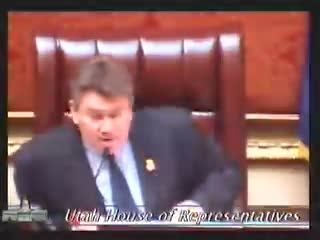
With no further debate, the House opened and then closed voting. The Speaker announced First Substitute House Bill 55 "having received 69 yes votes, 0 no votes, passes this body and will refer to the Senate for further consideration."