Get Full Government Meeting Transcripts, Videos, & Alerts Forever!
Get email alerts on the Sb 2002 Testing Pilot topic
No spam. Unsubscribe anytime.
House approves pilot letting a few districts use alternative student assessments
Summary
The House passed an amended Senate Bill 2002 to authorize a short-term pilot allowing two districts (and possibly part of a third) to use an alternative to the UPAS assessment; sponsor said the pilot would end June 30, 2010, would produce comparative data and require State Board and federal acceptance for accountability purposes.
Representative Merlin Newbold (House sponsor) moved Amendment No. 4 to Senate Bill 2002, describing it as a pilot that "sets a repeal date of June thirtieth of 2010" and authorizes two school districts (and possibly part of a third) to participate in an alternative assessment while being exempted from current UPAS requirements for the pilot period.
Newbold said the pilot aims to reduce classroom testing time, provide faster feedback to teachers and to allow a third‑party evaluator to compare the alternative assessment with the existing UPAS system. He told the House there is "not a fiscal note" for the proposal and that participating schools had supplied computers and supplies while the State Office of Education provided minimal assistance.
Members questioned potential costs tied to post‑secondary testing (for example ACT administration) and whether the state would pay for multiple test administrations. Newbold said rulemaking by the State Board of Education would govern assessment rules and that specifics about multiple ACT payments were to be determined, urging prudence on one-time payments.
Representative Moss asked whether the pilot would affect federal accountability under No Child Left Behind. Newbold said the House could proceed with the pilot, but acknowledged acceptance by the U.S. Department of Education would be required for replacing UPAS for accountability purposes; until federal approval, the state would continue to use the current system for accountability reporting.
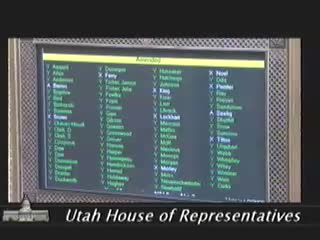
Supporters, including other representatives from participating districts, described existing readiness—hardware, software, and training were in place—and argued the pilot would reduce duplication of testing and supply useful data for state policymakers. After floor discussion and waiver of summation, the House voted to pass Senate Bill 2002 as amended, 69-0, and the bill will be returned to the Senate for further action.
Next steps: the State Board of Education would be involved in rulemaking and the bill’s evaluation requires federal acceptance for full substitution in accountability reporting.