Get Full Government Meeting Transcripts, Videos, & Alerts Forever!
Get email alerts on the Public Finance topic
No spam. Unsubscribe anytime.
House approves SB5 to allow revenue bonds for campus facilities; sponsor says projects repaid from rents
Summary
The House passed SB5, a revenue bond and capital facilities authorization, after the House sponsor described bonds as repaid from project revenues. Representative Stephen Clark said University of Utah housing and a neuropsychiatric institute projects would be paid from rents; the bill passed 65‑7.
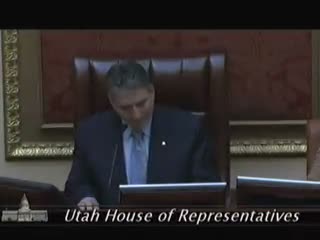
The Utah House on March 11 passed Senate Bill 5, a revenue bond and capital facilities authorization, after brief questions about how university projects included in the measure would be paid.
House sponsor Representative Stephen Clark said SB5 authorizes revenue bonds for approved projects that the state has not funded outright. "These are revenue bonds for the projects that are approved but not funded by the state," Clark said, adding that revenue bonds "are paid back with the revenue that is received from the project." He described the bonds as applying to capital projects such as donated buildings whose maintenance and debt service are covered from project income.
Representative Holdaway asked whether a University of Utah housing project in the bill would be repaid from rents and where the housing would be located. "It'll be paid by rent," Clark said, and when pressed on location he replied, "I can't tell you. I don't know exactly where the location will be. It will be on campus." On whether operation and maintenance costs are included, Clark said O&M would be included and reimbursed through the rents.
After the exchange the chamber opened voting. The clerk reported SB5 passed the House 65 yeas and 7 nays; the bill will be signed by the speaker and returned to the Senate for the president's signature.
The bill does not change the state's obligation on general obligation debt; sponsors emphasized the measure uses project revenues to repay the bonds, distinguishing it from GO debt. The sponsor offered to answer further questions but waived additional discussion before the vote.
The next procedural step is return to the Senate for the president's signature and any subsequent implementation steps determined by the sponsoring agencies.