Get Full Government Meeting Transcripts, Videos, & Alerts Forever!
Get email alerts on the Energy Infrastructure topic
No spam. Unsubscribe anytime.
House approves energy transmission authority bill intended to spur renewable development
Summary
The House passed third substitute SB 76 to create a state transmission authority empowered to issue bonds to build electric transmission lines, aiming to connect renewable resources to the grid. Sponsors said bonds would be repaid through sale of power; supporters cited rural economic development and utility backing. The measure passed 68–2 and will return to the Senate.
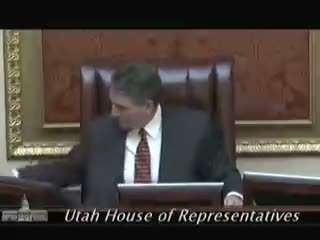
Lawmakers on the Utah House floor approved legislation to create a state transmission authority designed to help bring renewable energy projects onto the grid, passing third substitute Senate Bill 76 by voice and recorded roll call (68 yes, 2 no) on March 12, 2009.
Representative Barris, the House sponsor, said the bill's purpose is "to create an electric transmission infrastructure for renewable energy" while allowing transmission of other sources to help stabilize the grid. The proposal would create an independent state transmission authority with a board that can issue bonds to finance qualifying transmission projects; the board must show a qualifying project's contribution to economic development, strategic siting relative to renewable zones and a business case sufficient to service bond debt.
Representatives asked how the authority would interact with existing utilities and cooperatives. Barris said the established grid is built by public utilities and co-ops, and that "the support from this bill is not only from the renewable industry but from these public utilities such as Rocky Mountain Power, UAMPS and so forth" and that the lines could be financed by bonds but used and leased by existing utilities.
On repayment, Barris said the business plan required to qualify a project must demonstrate capacity to service the bond through sale of electrical power transmitted on those lines. Backers argued the authority would enable small renewable developers who otherwise lack capital to connect to the grid; opponents raised questions about monopolies and utility roles but the bill carried on the floor.