Get Full Government Meeting Transcripts, Videos, & Alerts Forever!
Get email alerts on the Property Tax topic
No spam. Unsubscribe anytime.
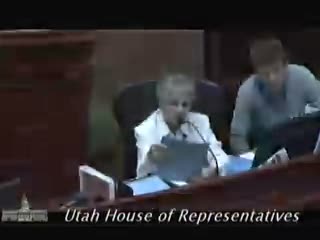
Residential-exemption proposal fails after lengthy House debate on tax shifts
Summary
After extended floor debate about fairness and local assessor practices, the House rejected the second substitute to HB246, a bill that would have expanded the residential-property tax exemption to many homes on larger lots. Opponents warned the change would shift taxes to smaller-lot homeowners.
The Utah House debated and then rejected a second substitute to House Bill 246, a proposal to expand and clarify the residential-exemption rules for property-tax assessment on larger lots.
Representative Ford described the bill as correcting an inequity in assessment between small and large residential lots and said it would give county assessors tools to identify owners of secondary homes improperly claiming the exemption (SEG 1946-1965). He said the bill was not aimed at wealthy owners but at homeowners who must live on larger, un-subdividable lots because of local zoning.
Members raised fiscal concerns and constitutional questions about shifting the tax burden. Representative King argued the measure would reallocate taxes and could raise rates on many homeowners; Representative Webb and others pressed whether county assessors use consistent appraisal methods. Representative Hutchings and others highlighted the bill’s intent to protect primary residences in rural areas.
Sponsor Representative Bigelow and others said the worst-case scenario for the shift would be minimal — citing an example of approximately $1.64 per household in heavily impacted areas — while opponents said even small shifts are unfair to many residents. After debate the House voted and the second substitute failed 33-39.
What happens next: The measure failed on the floor and will not advance in this form; proponents may revise language or pursue other remedies to address assessor practices.
Speakers quoted are attributed to their remarks on the House floor and limited to those who spoke in the HB246 debate.