Get Full Government Meeting Transcripts, Videos, & Alerts Forever!
Get email alerts on the Prison Education topic
No spam. Unsubscribe anytime.
House amends prison-education funding bill to lock funds for postsecondary programs, then passes HB100
Summary
Lawmakers amended HB100 to specify the Board of Regents and Department of Corrections jointly develop prison postsecondary plans and to restrict certain funds to postsecondary education; supporters said the changes protect education funding while addressing program continuity after community-college cuts. The amended bill passed the House.
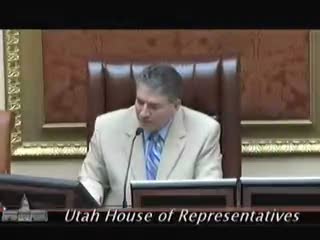
The Utah House on Feb. 23 adopted amendments to House Bill 100 to tighten how phone-surcharge and other education funds for prisoners are governed and then passed the second substitute as amended.
Representative Karl Wimmer moved Amendment No. 5 to reinstate the State Board of Regents as a required partner with the Department of Corrections in developing and implementing a recidivism-reduction and education plan, and to clarify that particular funds be used for postsecondary education (sponsor’s remarks and amendment discussion, SEG 731-756). Wimmer said the change was requested by Snow College leadership and would ensure money is spent on postsecondary programming.
Members raised concerns about Salt Lake Community College’s reactions: Representative McKitt and others reported the college expected to cut roughly half of its prison-delivered programs in July and worried about subsidy and equipment issues. Wimmer acknowledged the community college’s concerns, saying that the Department of Corrections would continue to use the college when programs remain available and that the new structure allows delivering education to more inmates for less money. He argued the change saves taxpayers nearly $1 million annually according to materials he distributed.
Representative Draxler offered an amendment to convert intent language in Section 6 to statutory language to explicitly protect the funds for inmate postsecondary education; the House adopted that amendment as well (SEG 1040-1076). Multiple members praised the bill’s focus on post-release employment and recidivism reduction; Representative Johnson and Representative Hutchings urged support citing positive outcomes from vocational training.
The House voted on the amended second substitute; the clerk recorded passage, 68 yes, 3 no. The bill will move to the Senate for further consideration.
Speakers quoted are identified in the transcript and limited to those who spoke during HB100 debate.