Get Full Government Meeting Transcripts, Videos, & Alerts Forever!
Get email alerts on the Energy Policy Wci topic
No spam. Unsubscribe anytime.
House passes nonbinding energy-resolution urging review of Western Climate Initiative membership
Summary
The Utah House passed First Substitute House Resolution 3, a nonbinding message urging a review of the state's participation in the Western Climate Initiative and calling for broader stakeholder dialogue; sponsor Rep. Michael Noel argued WCI membership could harm Utah’s coal-dependent economy and minority communities, while opponents said continued participation preserves the state's seat at the table.
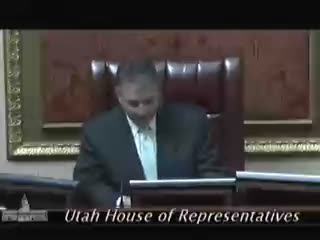
The Utah House of Representatives voted to approve First Substitute House Resolution 3 on energy policy, a nonbinding message from the legislature expressing concern about the state’s role in the Western Climate Initiative (WCI) and urging broader legislative oversight and stakeholder dialogue.
Representative Michael Noel introduced the resolution and framed it as a response to what he described as a flawed BRAC (Blue Ribbon Council on Climate Change) process and outside funding that, in his view, biased analyses toward cap-and-trade policies. “Utah was awarded $370,000 expressly for Utah's Department of Environmental Quality and Governor's Energy Advisor to embark on a Utah greenhouse gas policy crusade,” Noel said, adding that some organizations funded by that grant had since sued the state. He argued that, because Utah is “90 plus percent coal fired,” an aggressive carbon cap could put the state at an economic disadvantage and disproportionately hurt small businesses and low-income and minority populations.
Noel told colleagues the resolution is not legally binding but is intended as a formal message to the governor and executive branch: “Any resolution does not bind. What it does is it suggests, it tries to coerce, It lets the branch of government, in this case, the governor know that there is a significant amount of concern,” he said, and urged the body to seek more open, comprehensive analysis before endorsing policies with fiscal implications.
Representatives speaking against the resolution said continued participation in WCI preserves Utah’s influence. Representative Chavez Hock said she opposed the resolution and urged continued involvement, noting health and pollution impacts are often worse in minority communities: “The elephant is there, and the elephant is climate change,” Chavez Hock said, arguing the state should have a voice at the table rather than be an observer.
Debate included questions about separation of powers and who has authority to join multistate initiatives; Noel and others acknowledged that the governor made the WCI membership decision but argued the legislature should use resolutions to register its concerns and request greater transparency.
The House adopted the resolution after debate concluded under a motion to end debate. The transcript records the resolution as passing the House; the official enrolled action will be transmitted per usual legislative procedure. The resolution is a message bill and does not by itself change state law or impose requirements on the executive branch.
The next procedural step is enrollment and transmittal to the Senate and notification to the governor's office; because the resolution is nonbinding, further legislative or statutory action would be required to limit executive participation in multistate compacts or programs.