Get Full Government Meeting Transcripts, Videos, & Alerts Forever!
Get email alerts on the Immigration Enforcement topic
No spam. Unsubscribe anytime.
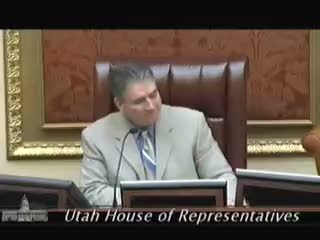
Utah House approves strike-force measure to target felony crimes tied to illegal immigration
Summary
Lawmakers passed first substitute HB64 to create a multi-agency strike force focused on major felony crimes associated with illegal immigration, including human trafficking and document fraud; sponsor said funding would be roughly $891,000 and could be seeded by federal JAG/CCJJ funds, but appropriation is not yet secured.
The Utah House passed first substitute House Bill 64 on a voice vote after extensive floor debate, approving a multi‑agency “strike force” to target major felony crimes associated with illegal immigration, including human trafficking, drug trafficking and document fraud.
Sponsor Representative Deane said the unit would be run through the Attorney General’s Office with volunteer participation from local governments, sheriff’s departments, police and federal immigration enforcement where possible. “This bill does exactly that,” he said, summarizing the legislation’s intent to consolidate effort on felony crimes and to merge the document‑fraud work previously contemplated in Senate Bill 81 into a single unit.
On funding, Deane told members the project was scaled down from an initial estimate of about $1,000,000 a year to an estimated $891,000. He said that funding had not yet been prioritized by Executive Appropriations but that federal JAG/CCJJ funds were one likely source for initial years and that any appropriation would be “subject to appropriation.”
Several members asked how the strike force would operate in practice and whether it would carry out workplace raids or be a primarily investigative/coordinating body. Deane said he did not envision ICE driving raids on the ground in Utah and emphasized cooperation and database‑sharing: “It doesn't need to be boots on the ground all the time,” he said, noting federal databases and investigative tools could be shared.
Supporters framed the measure as a focused, better‑funded alternative to broader approaches. Representative Steven Clark praised the narrower approach, calling it a “rifle approach” instead of a “shotgun approach” and said the bill was “funded correctly.” Critics pressed for clarity on the funding source and expressed concern about local government or executive bodies being constrained by broad requirements written into the bill.
The House recorded final passage for first substitute HB64 with 69 yes votes and 5 no votes; the bill was referred to the Senate for consideration.