Get Full Government Meeting Transcripts, Videos, & Alerts Forever!
Get email alerts on the Legislation Roundup topic
No spam. Unsubscribe anytime.
House advances a slate of bills on consent and concurrence calendars
Summary
The Utah House approved a range of measures on consent and concurrence calendars, including HB 399 (Charitable Care Amendments), HJR 22 (Medicaid asset-test study), HB 245 (9-1-1 Committee technical authorities), HB 192 (personal-injury interest rate reduction) and HCR 7 (opposition to National Landscape Conservation System).
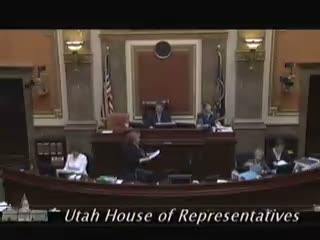
Salt Lake City — During a busy floor session, the Utah House moved multiple bills through the consent and concurrence calendars and returned others to the Senate for further consideration.
On the consent calendar, Representative Bradley Last presented House Bill 399, the Charitable Care Amendments, which broadens liability protections to more health professionals and clarifies that small gifts or donations (for example, lunch or a smock at a free clinic) do not affect charitable care liability provisions. Voting opened and closed and HB 399 passed the House 70–0.
Representative Rebecca Chavez-Hauck introduced House Joint Resolution 22 to recommend an interim study on whether to repeal the Medicaid asset test and to simplify the Medicaid application process; after an initial electronic vote experienced a problem, the chamber revoted and HJR 22 passed 64–6.
Other measures moved to the Senate or were otherwise advanced: HB 245 (Utah State 9-1-1 Committee Amendments) and HB 192 (reducing the personal-injury judgment interest rate from 10% to 7.5%) were presented and passed for transmittal; HCR 7 (expressing opposition to congressional enactment of the National Landscape Conservation System) passed 69–3.
These measures generally passed with large margins and were placed on the appropriate calendars for Senate consideration or enrollment.
Next steps: Passed items will be transmitted to the Senate or enrolled for the governor as appropriate.