Get Full Government Meeting Transcripts, Videos, & Alerts Forever!
Get email alerts on the Healthcare Workforce topic
No spam. Unsubscribe anytime.
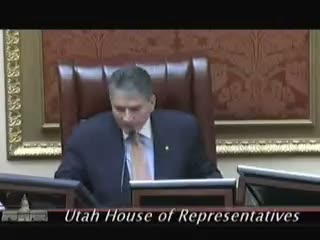
Utah House rejects bill to license anesthesiologist assistants after heated debate
Summary
The Utah House debated House Bill 269 to authorize anesthesiologist assistants (AAs) to practice under direct supervision of anesthesiologists; supporters argued it expands workforce options and preserves patient choice, while opponents warned of safety risks and market disruption. The House recorded 32 yes and 41 no, and the bill was sent to staff for filing.
Representative Julie Fisher, the bill sponsor, asked the House to allow a supervised anesthesiologist assistant pathway, saying the role has existed nationally since 1971 and arguing it would expand training and hiring options for physicians and patients. “This practice of having anesthesiology assistants has been around since 1971,” Fisher said, adding that the proposed program requires a BS in the sciences, a rigid premedical curriculum, a minimum GPA and MCAT and direct supervision by an anesthesiologist.
Opponents framed the bill as unnecessary in Utah and potentially harmful to patient safety and existing providers. “I believe that this bill addresses no currently existing identifiable need in the state of Utah,” Representative Powell said, arguing the state is not experiencing a shortage of anesthesia providers and cautioning that AAs carry far less national experience than certified registered nurse anesthetists (CRNAs). Powell cited comparative figures on the floor: “There are 40,000 CRNAs practicing and only between 3,000 AAs practicing.”
Questions from members focused on the definition of supervision, liability, billing and impacts in rural hospitals. Representative Clark pressed for clarity on how close an anesthesiologist must be to supervise an AA; Fisher replied that AAs would be part of a care team, supervised by the anesthesiologist who could move between rooms within the surgical area once anesthesia is induced. Fisher also cited two outcome studies—one from Kentucky and one from Ohio—saying they showed “no difference in the outcomes of the anesthesiologist assistants practicing.”
Sponsor and supporters emphasized choice for physicians and patients and compared the model to other supervised allied-health roles. Supporters argued the amendment the sponsor offered would explicitly preserve CRNAs’ ability to practice and would not exclude CRNAs from care teams. The sponsor placed and the House adopted Amendment No. 1 (dated 02/26/2009), which specifies that supervision of AAs does not prevent an anesthesiologist from supervising CRNAs.
Despite the amendment and extended floor discussion, concerns about rural access and potential market disruption persisted. Representative Noel warned that allowing AAs could displace CRNAs, particularly in rural areas that currently rely on CRNAs, while other members argued the bill simply adds options for practices to choose.
After debate and the amendment’s adoption, the House opened the final vote on the second substitute of HB269 as amended. The Reading Clerk announced the result: 32 yes and 41 no. The transcript records the bill being sent to staff for filing after that tally.
The House did not adopt the bill; the outcome leaves the policy unchanged and, per the floor record, the sponsor and supporters may choose to pursue further steps or revisions in a future session.