Get Full Government Meeting Transcripts, Videos, & Alerts Forever!
Get email alerts on the Public Safety topic
No spam. Unsubscribe anytime.
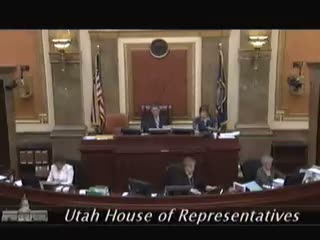
House floor debates HB273 on inter-facility ambulance contracts, adopts targeted amendment
Summary
Lawmakers debated a second-substitute for HB273 to permit local RFPs and limited-scope inter-facility transport licenses in select first- and second-class counties; floor adopted an amendment clarifying local dispatch/911 policies and rejected a wider competition amendment 27–46.
The Utah House considered second-substitute House Bill 273 on Feb. 27, a measure revising how inter-facility ambulance transports and limited-scope licenses are handled in counties of the first and second class.
Sponsor Representative Noelle described the bill as the product of lengthy compromise among cities, emergency medical service providers, private ambulance companies and fire chiefs. The bill preserves existing E‑911 providers and allows political subdivisions to issue requests for proposals (RFPs) for inter-facility transport; it also creates a limited-scope license in a narrowly defined situation (called out on the floor for Salt Lake City) that would allow hospitals to contract with licensed providers if the political subdivision does not issue an RFP.
Representative Noelle moved Amendment No. 2 (dated 02/27/2009) to delete an obsolete cross-reference and to clarify that local jurisdictions’ policies regarding whether 911 is called for inter-facility calls would be followed. The floor adopted that amendment.
Members asked clarifying questions about scope and equity: whether the bill opens competition statewide (sponsor said it does not), how dispatch decisions will be made (local E‑911 dispatchers retain authority), and whether licensed limited-scope providers must transport patients regardless of ability to pay (sponsor said the license requires providers to transport all patients). Representative Lockhart moved an amendment to broaden competition across all first- and second-class counties; sponsor opposed as undermining the negotiated compromise. The motion to amend failed on a recorded division: 27 yes, 46 no.
Sponsor emphasized the narrow, local-control focus and said he remained open to future refinements in the Senate. The transcript does not include a final floor tally for ultimate passage of the second substitute as amended; the Speaker opened voting on the second substitute later in the record but the final vote count is not recorded in the provided excerpt.
The bill’s immediate effects, as explained on the floor, would be limited to counties meeting the first- or second-class population thresholds and include a specific limited-license mechanism for Salt Lake City if a political subdivision does not issue an RFP.