Get Full Government Meeting Transcripts, Videos, & Alerts Forever!
Get email alerts on the Elections topic
No spam. Unsubscribe anytime.
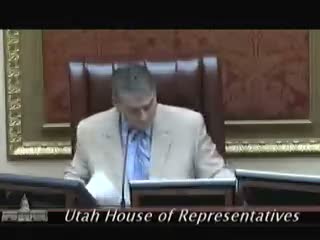
Utah House passes voter identification bill after extended debate
Summary
The Utah House on Feb. 23, 2009 passed first substitute House Bill 126, a voter-identification measure, by 51-22 after adopting amendments that remove a requirement that poll workers record the type of ID shown and allow provisional voters five business days to verify ID.
SALT LAKE CITY — The Utah House of Representatives passed first substitute House Bill 126 on Feb. 23, 2009, approving a voter-identification law on a 51-22 vote and sending the measure to the Senate. The bill, as amended, requires voters to show identification at polling places but removes a provision forcing poll workers to record the specific form of ID shown.
Representative Dawe, the bill sponsor, said the amendment to strike the requirement that clerks write down the form of identification keeps the bill simpler while maintaining the requirement that a voter who signs the register has shown valid ID. "If a voter signs the register, then they must have shown a valid type of ID," the sponsor said in floor remarks introducing Amendment No. 2.
A second, separate amendment offered by Representative Watkins allows a voter who casts a provisional ballot because they lack ID on Election Day to provide valid identification to the county clerk within five business days after the election for the ballot to be counted. Watkins said the change responds to rural and elderly voters who may not immediately be able to return home to retrieve an ID. The sponsor described that amendment as "friendly," and it was adopted.
Opponents warned the measure could impose burdens on elderly, rural and non-English-speaking voters, and some members questioned whether documented instances of voter fraud in Utah justify the change. Representative Lippback argued the bill is a "solution looking for a problem," noting a lack of documented widespread fraud and expressing concern about fiscal and administrative burdens on county clerks.
Supporters said a range of acceptable identification forms is included in the bill (driver's license, state ID, passport, or a combination of secondary documents), and that the law brings "integrity and veracity" to elections. Sponsor Dawe said the legislature worked with county clerks and the County Clerk Legislative Committee to craft the substitute and a broad list of acceptable IDs.
The clerk announced the final tally: first substitute HB126, as amended, passed the House 51-22 and will be transmitted to the Senate for further consideration.
The next step is consideration in the Utah Senate; no Senate action was recorded in the House transcript from this session.