Get Full Government Meeting Transcripts, Videos, & Alerts Forever!
Get email alerts on the Higher Education topic
No spam. Unsubscribe anytime.
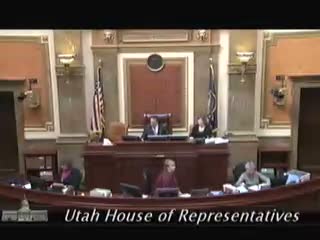
Utah House approves higher-education tax credit and savings plan after debate on private colleges and fiscal impact
Summary
After extended debate and failed amendments, the House passed First Substitute House Bill 35 to allow redirecting tax refunds into Utah education savings accounts and to create a tuition tax credit; the measure passed 62–3 and will be referred to the Senate.
The Utah House on the floor Tuesday voted to pass First Substitute House Bill 35, a two-part measure intended to encourage college savings and keep graduates working in Utah. The bill passed 62–3 and now moves to the Senate for further consideration.
Representative Jason Dougal, the bill sponsor, said the measure has “two key components”: simplifying saving for college by allowing taxpayers to redirect refunds to a Utah Education Savings Plan and providing a tuition tax credit for students who work in Utah. “This bill has 2 key components in regards to higher education,” Dougal said, adding the tax credit is intended to “help drive our economy by encouraging those students to put their talents to use in Utah rather than leaving the state.”
The bill drew sustained questioning and several amendment attempts on the House floor. Representative Newbold offered Amendment No. 3 to expand the tax-credit eligibility to students at a broader subset of private institutions, naming BYU, Westminster, LDS Business College and the University of Phoenix as examples. Newbold argued the change would allow students who pay their own tuition at private institutions to claim the credit. “The tax credit is taxes that are owed by the individual, and they may use their tuition as a tax credit,” Newbold said, stressing that no direct state dollars would be sent to private institutions through the proposal.
Opponents warned about constitutional and fiscal risks of extending credits to students at private or religious institutions. Representative Holdaway raised concerns about the Utah Constitution’s prohibition on applying public money to religious instruction, and multiple members questioned the size of the fiscal exposure if the credit were broadened. Representative Menlove noted that the expansion could increase the program’s fiscal footprint and said her discussions with the sponsor suggested the amendment might increase cost “maybe by $1,000,000,” though she also called the total impact unknowable without more data.
A motion to adopt Newbold’s amendment failed on division (29 yes, 40 no). Representative Cosgrove later moved Amendment No. 2 to remove the tuition tax credit portion and retain only the educational savings plan; that amendment also failed (25 yes, 43 no). Supporters of the original, fuller bill argued the immediate tax credit would provide near-term stimulus by putting money into households, while opponents favored using the education fund for broader, need‑based tuition relief.
Sponsor Dougal noted a letter from the State Board of Regents urging support for the legislation and said prioritization and the fiscal-note process would follow in subsequent stages. “We’ll have another bite at the apple in regards to the fiscal note and prioritization,” Dougal said, while asking members to consider the policy message to students.
The House recorded the final passage of First Substitute House Bill 35 by a vote of 62 yes, 3 no. The bill was referred to the Senate for consideration; further fiscal details and prioritization will be addressed in later steps.