Get Full Government Meeting Transcripts, Videos, & Alerts Forever!
Get email alerts on the Abortion Policy topic
No spam. Unsubscribe anytime.
House passes first substitute of HB90 after hours of debate over viability and penalties
Summary
After heated floor debate, the House approved a first substitute to HB90 to align fetal‑homicide language with other homicide statutes, clarify viability using Supreme Court language and expand post‑viability exceptions; a motion to reduce the felony level failed before final passage.
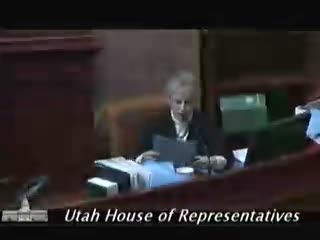
The Utah House of Representatives on Feb. 3 passed a first substitute to House Bill 90, the abortion‑law amendment, after extended floor debate over definitions of viability, criminal penalties for illegal abortion and exceptions for fetal deformity.
Representative Paul Ray, the bill’s sponsor, said the measure brings statutory language about fetal homicide into alignment with other homicide statutes and uses language drawn from the U.S. Supreme Court to clarify viability. “We already have a fetal homicide bill here in the state of Utah,” Ray said in opening remarks, arguing the bill’s intent is to make the criminal code consistent across causes of fetal death.
Opponents warned the bill risks criminalizing medical judgment and intruding on the doctor‑patient relationship. Representative Reesen urged colleagues to consider the impact on medical practice and cited formal opposition from the Utah Chapter of the American Academy of Pediatrics and state medical associations. “Any legislation that criminalizes a doctor for their role in a decision made by the patient and their family is extremely problematic,” Reesen said.
During floor debate members considered amendments. A motion to reduce the proposed penalty level from a second‑degree to a third‑degree felony was offered and discussed; Speaker called for a division and the motion failed on a recorded vote, 32 yes to 41 no. Several speakers emphasized that the bill does not alter lawful abortions before viability but seeks to address unlawful acts that cause fetal death.
The sponsor described amendments that restore certain exceptions, including those for fetal anomalies and for circumstances identified by two physicians where the child would not survive outside the womb. Ray said the amendment was designed to avoid tying physicians' hands while preserving protections for unborn children.
After debate the House recorded final passage of the first substitute to HB90; the Clerk announced the vote as 56 yes and 16 no. The bill will be transmitted to the Senate for consideration.
The House record shows references during debate to Roe v. Wade and Planned Parenthood v. Casey, and several members urged courts or future rulings would guide severability language included in the substitute. The next procedural step is transmission to the Utah Senate for its consideration.