Get Full Government Meeting Transcripts, Videos, & Alerts Forever!
Get email alerts on the Legislative Organization topic
No spam. Unsubscribe anytime.
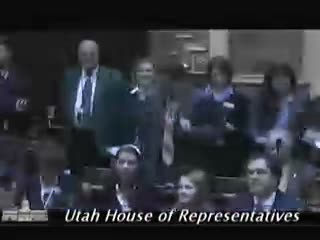
David L. Clark elected speaker of Utah House and sworn in, pledges civility and public input
Summary
The Utah House unanimously elected Representative David L. Clark as speaker on Jan. 26, 2009. Clark was sworn in and delivered an inaugural address urging civility, honesty and public engagement, and invited citizens to submit ideas to Utahmatters@utah.gov.
Representative David L. Clark was elected speaker of the Utah House of Representatives by unanimous voice vote during the House’s organizational session on Jan. 26, 2009. The House first nominated Clark and then, by acclamation, elected him to preside over the 58th Legislature.
Clark was formally sworn in on the chamber floor and immediately addressed members. In his remarks, Clark urged lawmakers to practice civility and to put constituent service above partisan point-scoring: “If we do not uphold the high values entrusted to us in this representative form of democracy, we risk the deterioration and the rusting of people’s trust in us,” he said.
Clark tied the start of the session to historical moments observed on Jan. 26 and framed the upcoming work around innovation and public engagement. He emphasized limits on legislative power, the value of listening and consultation with colleagues, and the need for honesty: “Tell the truth whether you have to or not. Remember that your word is your currency,” he said. He encouraged Utahns to contribute ideas to the legislative process and provided an email address for submissions: Utahmatters@utah.gov.
The election and swearing-in were processed by voice votes that members recorded as passing unanimously. The House’s initial organizational motions were handled without roll-call tallies; the speaker announced that a quorum was present at the start of the session.
The next formal procedural steps included referral of introduced bills to the Rules Committee and the appointment of committees to notify the Senate and governor that the House was organized and ready to do business.