Get Full Government Meeting Transcripts, Videos, & Alerts Forever!
Get email alerts on the State Budget topic
No spam. Unsubscribe anytime.
Utah House approves supplemental budget package, tapping disaster fund and reducing capital set‑aside
Summary
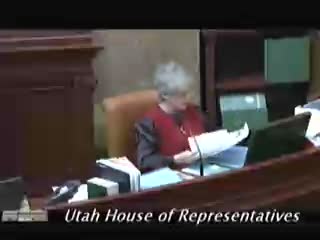
The Utah House on Feb. 2 passed a trio of budget bills — HB300, HB301 and HB3 — to address a roughly $350 million fiscal‑year 2009 shortfall, including a temporary reduction of the capital set‑aside and a $15 million transfer from the disaster recovery fund after a floor amendment. The package passed and will be sent to the Senate.
Representative Ron Bigelow, the sponsor, opened the budget sequence by asking the House to act quickly on three interlinked measures so state agencies could implement the adjustments for fiscal year 2009.
"This bill, HB300, is the first step," Bigelow said when introducing a temporary change to the capital improvement set‑aside (ARNI). He described the measure as an exception for fiscal years 2009 and 2010 that would reduce the statutory 0.9 percent set‑aside to roughly 0.6 percent for those years so the funds could be used in the supplemental appropriation package.
Bigelow characterized HB301 as a narrow amendment to the State Disaster Recovery Restricted Account to allow use of money to address a general‑fund deficit tied to the supplemental budget. On the floor he noted the fund's current balance and the proposed withdrawal: "The current balance in the fund is $30,000,000. We are removing $15,000,000. That will leave approximately $15,000,000 in the fund." (Representative Bigelow)
The main supplemental bill, HB3, was introduced as an overall package to close a roughly $350 million revenue gap through a combination of ongoing spending reductions (about $273 million by the sponsor's accounting), use of fund balances (about $45 million), and $32 million of building cash to be handled with bonding. Bigelow said the reductions average about 3.8 percent across operating budgets, with public education receiving roughly a 3 percent reduction and classroom budgets about 1.5 percent. He also said lawmakers had added a $15 million one‑time backfill to public education via a caucus decision.
On HB301 one floor amendment drew extended attention. Representative Mathis moved to delete a clause (Line 54) that would permit the Disaster Recovery Fund to be used for the general‑fund deficit; Representative Mathis and Representative Oda argued the fund should be preserved for disasters. After debate a substitute amendment was adopted that limited the authority added to Line 54 to fiscal years 2009 and 2010 only; Representative Bigelow said he could support the clarified language.
Opponents of the package urged caution. Minority members argued the state was facing a temporary revenue shortfall rather than a structural spending problem. "We don't have a spending problem," Representative King said in floor remarks opposing HB3, and he urged greater use of the rainy‑day fund or bonding rather than cutting programs that serve residents. Supporters, including members who represent appropriations committees, said the package balanced competing priorities and preserved flexibility to modify the budget if federal stimulus funds arrive.
Final votes followed: HB300 (capital improvement modification) passed 73–0; HB301 (Disaster Recovery Restricted Account amendments) passed 73–1 as amended; and HB3 (current fiscal year supplemental appropriations) passed 65–9. All three bills will be transmitted to the Senate.
The House also adopted an index/cross‑reference approach to help members and agencies locate the changes within HB3; Bigelow said staff were preparing the crosswalk. He repeatedly framed the measures as temporary steps to allow state agencies to begin implementing changes and as reversible if revenue conditions improve or additional federal funds are made available.
The House's action clears the package for the Senate but leaves open political and policy disputes about the size, permanence and distribution of the cuts — particularly for education and for programs whose funding was reduced on an ongoing basis.