Get Full Government Meeting Transcripts, Videos, & Alerts Forever!
Get email alerts on the Public Safety topic
No spam. Unsubscribe anytime.
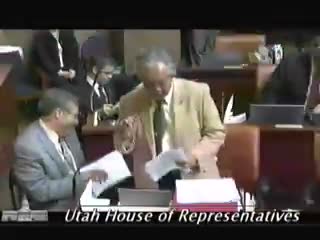
Utah House approves bill targeting gang activity after heated debate over enforcement and racial profiling
Summary
After extended floor debate and a failed amendment to narrow enforcement powers, the Utah House passed Senate Bill 16 to create temporary "gang‑free zones," require training for officers, and impose dispersal and short‑term penalties for re‑congregation. Supporters said it tools to prevent violence; critics warned of potential racial profiling.
The Utah House passed Senate Bill 16, a measure criminalizing certain organized gang behavior within designated "gang‑free zones," after prolonged floor debate and an unsuccessful amendment to limit enforcement language.
Representative Oda, the House sponsor, told members the bill allows a trained officer to order the dispersal of known gang members gathered in a designated area and creates an eight‑hour dispersal window before criminal penalties apply for re‑congregation. He said the measure is modeled on laws adopted in other states and is intended to give law enforcement a tool to prevent intimidation and violence.
Representative Litback offered Amendment No. 1 to narrow the dispersal language—so law enforcement would order only those actively engaging in gang loitering to leave—add a required public hearing and posted signage before a local legislative body could designate a gang‑free zone, require that enforcement be limited to officers with gang‑training, and mandate that training include departmental policy on racial profiling. Litback described personal experience with youth outreach and said, "It is not an exact science to identify gangs. There is concern in the minority community that this will lead to racial profiling."
Sponsor Oda and several colleagues opposed the amendment. Oda said civil‑rights and training requirements already exist in law and that dispersal of a whole group is sometimes necessary because bystanders who do not stop intimidation may be complicit. Representative McKiff argued the amendment could make the bill less likely to survive constitutional review and said the draft had been crafted to be "constitutionally palatable." Representative 16 (floor remarks) warned the House it must not "tie the hands of law enforcement." Opponents of the amendment repeatedly said the bill is intended to preempt the kind of unchecked gang violence seen elsewhere and to protect residents.
The House first voted on the motion to adopt Amendment No. 1; the amendment failed on division with 31 yes and 42 no votes. After further floor discussion and summations, the House opened and closed voting on SB16; the bill passed the body with a recorded tally of 56 yes and 17 no votes and was signed by the Speaker Pro Tem for return to the Senate.
The floor debate repeatedly raised concerns about the accuracy of identifying gang members, the risk of mistaken targeting of innocent citizens, and the need for meaningful training and public notice before creating restricted areas. Supporters said the bill is a preventive tool and noted similar statutes in other states. Representative Litback asked the House to "enhance the training, specifically around the conversations about gangs," and called for safeguards to reduce profiling.
Next steps: SB16 will be returned to the Senate for further action. Local legislative bodies would be responsible for designating restricted areas, and the bill leaves implementation details—such as signage duration and the scope of designated areas—to local determinations.