Get Full Government Meeting Transcripts, Videos, & Alerts Forever!
Get email alerts on the Corrections Healthcare topic
No spam. Unsubscribe anytime.
House approves default-inmate medical-payment formula for prisons in absence of contracts
Summary
The House passed the second substitute to HB 312 to set default payment rates for inmate medical care when no contract exists, specifying hospitals be paid 60% and physicians 65% of PEHP-contracted rates; the bill passed the House 62–7 and was sent to the Senate.
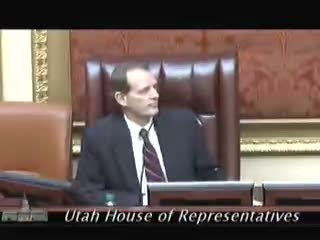
The Utah House on March 8 approved the second substitute to House Bill 312, establishing default payment rates for offender medical care when the Department of Corrections has no contract with a provider.
Representative Brey, speaking on the bill, said it "simply takes what was offered to the jails and does the same thing for the prison," explaining that if no contract exists hospitals would be paid 60% of the amount under the Public Employees Benefit Insurance Program (PEHP) and physicians 65% of PEHP-contracted rates.
Why it matters: the change is intended to give the Department of Corrections leverage while negotiating provider contracts and to limit the state's exposure when an offender requires care at a facility with no contract in place.
During floor questions, Representative Dunigan asked whether the change would force private insurers to pay. Representative Brey responded, "This does not require the private insurer to pay at all" and clarified that the bill treats private insurance as primary "if they're going to pay, they'll pay primary." Dunigan also asked whether the measure "will likely reduce in a lesser payment to the U of U Hospital Medical System, is that right?" Brey answered, "It could have depending on the contract to negotiate." The sponsor also noted University Medical Center could be affected if its existing contract expires and a new one is not reached.
The House recorded 62 yes votes and 7 no votes on passage. The enrolled measure will be referred to the Senate for further consideration.
Next steps: HB 312 will go to the Senate; no amendments or additional fiscal details beyond the rate percentages were specified on the House floor.