Get Full Government Meeting Transcripts, Videos, & Alerts Forever!
Get email alerts on the School Safety topic
No spam. Unsubscribe anytime.
House approves bill to inventory school seismic risk, sends list to state for review
Summary
The Utah House voted to pass first-substitute HB72, ordering school districts and charter schools to report building details and past seismic work to a Public School Seismic Safety Committee; funding for assessments is subject to appropriation.
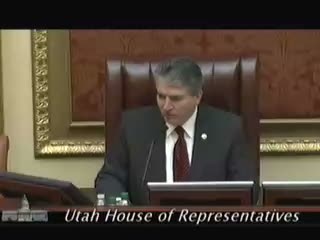
SALT LAKE CITY — The Utah House passed first-substitute HB72 on third reading after reconsideration, approving a statewide inventory of school buildings to flag structures potentially vulnerable in an earthquake.
Representative Larry Wiley, the bill sponsor, told the House the measure requires each school district and charter school to submit by Oct. 1, 2010, standardized information — including the school address, year built, most recent significant seismic improvement, square footage, staff and student counts, and any prior structural evaluations — to the Public School Seismic Safety Committee. "On or before 10/01/2010, each school district or charter school shall provide the following information," Wiley said during floor remarks.
Wiley and supporters said the bill is an information-gathering step, not a mandate to spend local funds. "It doesn't require that any money be spent," Representative Noel said when moving to reconsider the earlier action; the motion to reconsider passed and HB72 was elevated to the top of the third-reading calendar. Wiley told colleagues that the State Board of Education "shall reimburse school districts and charter schools for the cost of complying with this section from funds appropriated for that purpose," and that rapid visual assessments would occur only "as funding appropriated to the State Board of Education allows."
Members who supported the bill emphasized safety concerns for older buildings. Representative Sandstrom noted that structures built before 1974 lack modern seismic standards and said the inventory could reveal simple, low‑cost fixes for vulnerable schools. Representative Powell said the state should coordinate assessments because some smaller districts lack technical capacity to do them well.
Opponents raised questions about duplication of local records and the cost implications. A member asked why districts should re-submit documents if they already keep them; Wiley replied that prior requests had yielded incomplete returns and that a centralized, prioritized inventory would help direct resources where needed.
The House adopted the bill on a recorded vote (reported on the floor as 70 yes, 18 no, 7 absent) and directed it to the Senate for consideration.
What happens next: The bill will move to the Senate for its consideration; the committee receiving the inventory would prioritize schools for follow-up evaluations and any funding to support mitigations would require a separate appropriation.
Vote record and action: First substitute HB72 (Utah School Seismic Hazard Inventory) was reconsidered, placed on the House third‑reading calendar, debated and passed on third reading. The House clerk recorded the final vote as 70 yes, 18 no, 7 absent.
Sources: Floor debate and sponsor statements on the House floor, March 3, 2010 (Representative Larry Wiley).