Get Full Government Meeting Transcripts, Videos, & Alerts Forever!
Get email alerts on the School Finance topic
No spam. Unsubscribe anytime.
House passes temporary flexibility allowing some school districts to move capital funds into operations
Summary
The House passed a two‑year temporary measure allowing districts with unencumbered capital outlay levy funds to reallocate those dollars to maintenance and operations to address shortfalls caused by district splits and the economic downturn; supporters said Jordan District could free roughly $10–14 million. An amendment limiting use to classroom-related expenses was included; an amendment to shorten the sunset from two years to one year failed.
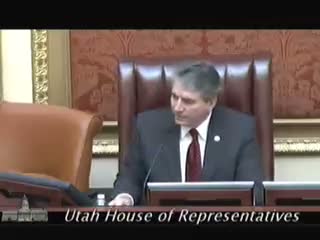
SALT LAKE CITY — The Utah House of Representatives on March 5 approved second substitute House Bill 295, a temporary measure that lets school districts move unencumbered capital outlay levy funds into their maintenance-and-operations (M&O) budgets for a limited period to avoid layoffs and service cuts.
Representative Sumption, who brought the bill back to the floor, said the legislation was designed as a bridge for districts hit by the economic downturn and, in some cases, the recent school‑district split. He said Jordan School District could marshal "in the neighborhood of $10,000,000 to maybe $14,000,000" of unencumbered capital funds to ease near‑term operational shortfalls.
The bill includes a sunset and controls. Representative Dunnegan successfully moved an amendment that restricts reallocated funds to classroom-related uses (teachers, aides, supplies and other direct student services) and prohibits using the transferred money for general administration. Supporters said the limitation was negotiated with affected districts and stakeholders to keep the money focused on instruction.
Representative Bigelow led a separate amendment effort to change the bill’s two‑year window to a one‑year sunset, arguing the legislature should preserve long‑term control of revenue‑allocation rules. That amendment failed on a recorded vote (21 yes, 53 no).
Debate included members from a range of districts. Members representing small and rural districts argued some areas — Grand County among them — need more than a single year to recover; others urged caution, emphasizing the legislature’s role in setting long‑term budget priorities. Proponents urged careful local budgeting, warning districts that the legislature might not renew the flexibility if it is not managed prudently.
After debate and the classroom‑use amendment, the House passed second substitute HB295 by voice vote and clerical tally reported the passage as 74 yes, 0 no. The bill will be transmitted to the Senate for further consideration.
The House record shows the measure was presented as a temporary, narrowly tailored option: districts may only move unencumbered capital funds (not bond proceeds or encumbered projects), must follow budgeting notice procedures, and must document uses to show the money benefits classroom instruction. Representatives repeatedly emphasized the provision was not intended to be a permanent change to how the legislature separates capital and operations funding.
Next steps: HB295 will proceed to the Senate for consideration. If enacted, local districts would have a limited administrative process and reporting responsibilities to reassign money from capital to operations under the constraints adopted by the House.