Get Full Government Meeting Transcripts, Videos, & Alerts Forever!
Get email alerts on the Bicycle Policy topic
No spam. Unsubscribe anytime.
Utah House approves ‘stop-as-yield’ bill for bicyclists after hours of debate
Summary
After extended debate over safety and enforcement, the Utah House passed House Bill 91 to allow bicyclists to yield at stop signs and certain red lights when no other traffic is present; the measure passed 49-20 and will go to the Senate.
The Utah House voted to pass House Bill 91 on traffic controls for bicyclists after an extended floor debate on safety and enforcement. The measure, described by sponsor Representative Rosemary Maas as codifying a commonly practiced "stop-as-yield" behavior, allows a person on a bicycle approaching a stop sign to yield the right of way to any vehicle in the intersection or approaching on another highway and then proceed if the way is clear. The House recorded a final vote of 49 yes and 20 no.
Lawmakers split over whether the change would improve safety for cyclists or create new hazards for motorists and children taught to dismount. Representative Maas said the bill "provides a common sense application of the current practice" and cited early-morning commuters who face signals that do not detect bicycles. Critics, including Representative Ron Bigelow and others, warned that motorists are not accustomed to checking the right side of their vehicles and that allowing bicycles to advance in queues could increase collisions.
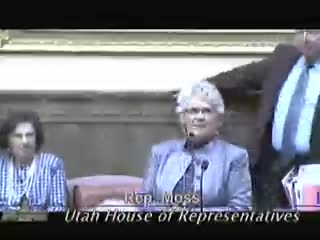
Members debated multiple amendments on the floor. Representative Moss successfully offered Amendment No. 3 (adopted) which included technical corrections and additions; Representative Keiser’s Amendment No. 4, which would have explicitly allowed bicyclists to advance to the front of queued vehicles, failed on a recorded voice vote. Supporters highlighted practical issues such as clip-in pedals on road bikes that make frequent stops difficult and pointed to practices in other states. Opponents emphasized driver visibility and the potential for confusion at high-traffic intersections.
On the question of traffic-signal sensors that do not register bicycles, the sponsor said cyclists and commuter groups generally know which signals are sensor-equipped but acknowledged she "can't answer that with 100% accuracy." The sponsor said the bill limits cyclist movement to when no vehicle is present and is aimed primarily at safety and efficiency on low-traffic streets.
With passage in the House, HB 91 will be transmitted to the Senate for further consideration. The sponsor and members said the law is intended to reflect current practice in many places and to reduce risk for bicyclists forced to dismount or remain stationary when signals fail to detect them.