Get Full Government Meeting Transcripts, Videos, & Alerts Forever!
Get email alerts on the Federal Lands Eminent Domain topic
No spam. Unsubscribe anytime.
Heated floor debate on HB143 seeks state eminent-domain route to access federal lands for school trust funding
Summary
HB143, proposing limited eminent-domain authority over some federal lands to provide access to school trust lands and pursue related litigation, drew lengthy debate over constitutional risks and potential educational funding benefits; an amendment narrowing who may sue was adopted on the floor.
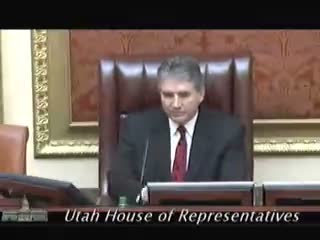
House Bill 143, which would authorize the State of Utah to pursue eminent-domain actions against certain federal lands to gain access or development rights for school trust lands, prompted an extended and impassioned debate on the House floor on Feb. 25.
Representative Chris Herrod (presented in the transcript as Representative Harrod), sponsor of the bill, framed the measure as a tool to restore state control and access to lands that could provide long-term funding for public education. "This bill is about coming back to those basic principles," he said, citing constitutional and historical arguments and noting the state controls a comparatively small share of land while roughly 69 percent of Utah is federal land.
Representative Harrod and co-sponsors argued the bill is part of a strategy that could yield significant revenue to the school trust if successful — including targeted access to parcels that they said could return considerable sums for school trust funds. He also reported companion legislation to provide funding for litigation and clarified Amendment No.2 would restrict who may bring the action to the state (not local subdivisions); that amendment was adopted on the floor.
Opponents and skeptics pressed constitutional legal issues. Representative King and others flagged the legislative review note and case law (equal-footing doctrine and prior Supreme Court decisions) and cautioned the bill would likely require litigation up to the U.S. Supreme Court. Representative Lipback and others asked about the potential costs; the sponsor pointed to a companion bill providing $1 million over three years for litigation expenses.
Floor debate included robust political framing: supporters described the bill as a necessary step to address disparities in school funding and to send a political message; critics warned of steep legal hurdles, uncertain outcomes and the risk of reaffirming adverse precedent. Representative Powell and others supported the bill as a long-term strategy to alter how federal lands are managed or to secure access for school trust purposes.
The transcript records the adoption of Amendment No.2 (clarifying that only the state may bring the action) and extensive back-and-forth about legal doctrine, precedent and funding for litigation. The record in the provided transcript ends amid continued floor debate; no final passage vote on HB143 appears in the available segment.