Get Full Government Meeting Transcripts, Videos, & Alerts Forever!
Get email alerts on the Privacy And Surveillance topic
No spam. Unsubscribe anytime.
House rejects bill to allow state administrative subpoenas for certain electronic subscriber data
Summary
HB150, which would have allowed state prosecutors to issue administrative subpoenas for limited subscriber identity/payment data on reasonable suspicion of felony activity, failed in the House amid privacy and scope concerns, 33-41.
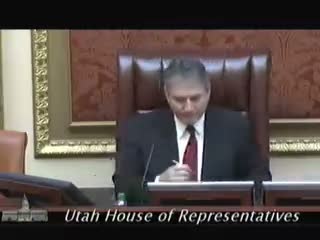
The Utah House on Feb. 25 rejected House Bill 150, a measure to allow state prosecutors to issue administrative subpoenas to obtain limited subscriber identity information from internet-service and phone providers when there is reasonable suspicion a crime has been committed.
Representative Bradley Dawe, sponsor of HB150, described the measure as a narrowly tailored tool to let investigators identify an owner of a phone number or IP address as a next step in investigations. "If there is a reasonable suspicion that a crime has been committed ... we want the attorney general to be able to take that phone number, go to the phone provider and find out very simply who's the owner of that phone number," Dawe said on the floor, stressing the subpoena would seek ownership, address and payment-method information only.
Opponents on the floor raised civil-liberty concerns and questioned the bill’s broad scope. Representative Biskupski urged caution, saying the bill’s reference to "any felony" could permit intrusive state access to private communications and recommended circling the bill for further review. Representative King said he circulated materials from an internet-service provider and the criminal-defense bar and asked members to vote no, calling the proposal "a much broader expansion" of state power than prior exceptions for crimes against minors.
Supporters argued the measure provided a limited identity-search tool that could speed investigations without immediate access to content. Representative McKiff described the standard in the bill as "reasonable suspicion" that would let investigators ask the next question — who is the owner — rather than seek full records initially.
After debate and summation, the House voted. Speaker announced HB150 failed to pass the House with 33 yes and 41 no; the bill was returned to staff for filing.
The bill included an amendment (Amendment No.3) referencing existing state framework (Title 77, Chapter 23) to hold providers harmless and to align notification procedures; that amendment was discussed and adopted earlier on the floor but did not change the final outcome.