Get Full Government Meeting Transcripts, Videos, & Alerts Forever!
Get email alerts on the Disaster Management topic
No spam. Unsubscribe anytime.
House adopts changes to disaster fund access and governor emergency powers
Summary
The House passed second substitute HB139 to create a three-tier authorization process for Disaster Recovery Fund expenditures, expand limited governor suspension authority during declared emergencies, and set reporting and oversight requirements; the measure passed 68–2.
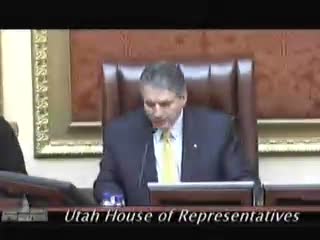
The Utah House on Feb. 26 approved second substitute House Bill 139, which revises the Disaster Recovery Fund Act and the Disaster Response and Recovery Act to clarify who may access emergency funds and under what conditions. The chamber passed the substitute 68–2 and will forward the measure to the Senate.
Sponsor Representative Voda described a tiered framework that increases departmental access thresholds and requires notice and reporting to legislative leaders and fiscal committees. Under the substitute, the Emergency Management Department’s access level is raised from $100,000 to $250,000; a second tier allows expenditures above $250,000 and less than $1,000,000 with governor approval and written notice to the Speaker, Senate President and fiscal offices; a third tier permits expenditures from $1,000,000 up to $3,000,000 with additional reporting to the Executive Appropriations Committee and oversight processes, including possible special session review.
The bill also clarifies the governor’s limited authority during a declared state of emergency to suspend enforcement of misdemeanor or infraction penalties related to food, health or transportation when necessary to respond to emergency needs, with written notice to legislative leaders and reporting to the Legislative Management Committee. Sponsor Voda said the measure balances timely executive action with legislative oversight and included procedural safeguards to prevent executive overreach.
Representative Bigelow and others described committee work to resolve appropriation questions, and multiple members praised the bill for addressing separation-of-powers concerns while improving emergency response flexibility. Representative Mascaro and Representative Frank said they supported the substitute after clarifications and committee negotiation.
The House voted 68–2 to pass the second substitute; the bill will be transmitted to the Senate.