Get Full Government Meeting Transcripts, Videos, & Alerts Forever!
Get email alerts on the Air Quality topic
No spam. Unsubscribe anytime.
House passes student-backed clean-air resolution urging reduced vehicle idling
Summary
The Utah House on the morning calendar passed HJR5, a nonbinding joint resolution that encourages Utahns to reduce unnecessary vehicle idling to protect public health and conserve fuel. The resolution, developed with Morningside Elementary students, was amended to remove language linking carbon dioxide to immediate health effects.
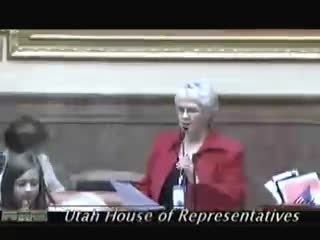
The Utah House on a voice and division vote passed House Joint Resolution 5 on clean air, a nonbinding measure encouraging voluntary reductions in vehicle idling to protect public health and reduce pollution. Representative Moss, who sponsored the resolution and introduced a group of Morningside Elementary students in the gallery, said the students researched pollutants and produced outreach materials including videos, bumper stickers and signs to discourage unnecessary idling.
"They did all the research, got the scientific data and spent a good deal of time researching and putting it together," Moss said, praising the students' campaign and calling the resolution an educational, voluntary approach rather than a punitive one. Moss said the resolution encourages schools, businesses and public facilities to post signage and promote reduced idling.
Debate focused on wording about greenhouse gases. Representative Noel moved to remove language that described carbon dioxide as a pollutant linked to direct health effects and to edit the sentence structure to avoid implying that carbon dioxide has the same immediate local-health impacts as hydrocarbons or carbon monoxide. Noel said the goal was to clarify the distinction between local air pollutants and greenhouse gases used in climate discussions. "Carbon dioxide is the greenhouse gas, the forcing gas that the climate change community wants to control," Noel said, and urged deletion of the specific reference to carbon dioxide in the public-health language.
Sponsor Moss said she would not expand her argument on greenhouse gases but defended the resolution's intent to discourage unnecessary idling that emits unhealthy substances near schools and residences. After debate and a motion to divide the House, members voted to adopt the amendment that removed the specific reference to carbon dioxide by a recorded tally of 47 yes to 24 no. A subsequent identical amendment to make the language consistent was adopted.
The amended HJR5 passed the House with 66 yes votes and 8 no votes and will be transmitted to the Senate for consideration. The resolution does not create penalties or require regulatory changes; it urges voluntary actions and local outreach. Representative Moss said she would return to the classroom to discuss how democratic deliberation translated into the amendment process and the final vote.
What happens next: HJR5 is nonbinding and will go to the Senate for its consideration. It encourages educational outreach and voluntary signposting to reduce unnecessary idling, particularly near schools and other sensitive sites.