Get Full Government Meeting Transcripts, Videos, & Alerts Forever!
Get email alerts on the Notary Public topic
No spam. Unsubscribe anytime.
House approves notary-public changes after debate over attorney exemption
Summary
The House passed third-substitute SB22, clarifying notary duties and process and adopting an amendment that requires attorneys to pass the state's written notary exam rather than receiving automatic exemption.
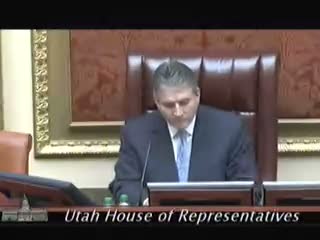
The Utah House on the floor considered and approved third-substitute SB22, a notary-public reform bill that clarifies the duties and commissioning process for notaries and addresses whether licensed attorneys should be exempt from the state's notary examination.
Representative Hunsaker, sponsor of SB22, said the bill makes clear notary publics must acknowledge who they notarize and the date, and sets procedural standards for commissions. Hunsaker also described administrative requirements including bond acquisition and related fees.
Representative Anthony Bigelow moved to amend the bill to require that licensed attorneys "pass the written examination administered under section 46-1-3" rather than be automatically exempt. Bigelow argued that knowledge of notary law is not acquired by ‘‘osmosis’’ through general legal training and that some attorneys do not routinely practice in areas covered by notary law. "Take the test or don't take the test," Bigelow said in urging uniformity.
Several members spoke both for and against the amendment. Representative Draxler and Representative Yori Fauch opposed the amendment, saying attorneys routinely encounter notary matters and have substantial related training; others including Representative Powell and Representative Sandstrom supported the amendment, saying the notary test and review protect the public and that making a class exemption risks errors that could subject attorneys to disciplinary review.
The House adopted Bigelow's amendment and then voted to pass third-substitute SB22 by a 69–2 margin. The bill will be returned to the Senate for concurrence or further action.
What happens next: SB22, as amended, is transmitted for Senate consideration and any further action required by the legislative process.