Get Full Government Meeting Transcripts, Videos, & Alerts Forever!
Get email alerts on the State Budget And Ethics topic
No spam. Unsubscribe anytime.
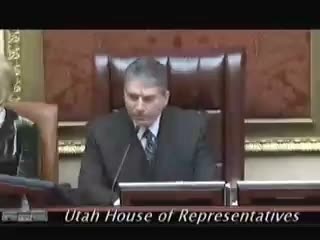
Utah House opens 2010 session, praises fiscal management and previews ethics reforms
Summary
In opening remarks, the Speaker highlighted Utah's comparatively strong economic performance, defended budget savings and education funding, and previewed multiple ethics measures including tighter disclosure, donation limits and a proposed independent commission to handle complaints.
Speaker (unnamed) opened the Utah House 2010 general session by framing the state's economic position as relatively resilient amid a national downturn, saying, "Utah has escaped the worst of the financial downturn." He cited an estimated state unemployment rate of 6.7 percent compared with higher rates regionally and nationally and listed several third-party rankings the state has received as evidence of economic strength.
The Speaker outlined budget principles he said have guided the state: avoid spending beyond reserves, use one-time revenue for one-time expenses, limit bonding to infrastructure and protect education funding. He noted that over the past decade student enrollment rose roughly 20.8 percent while public-education budgets grew faster (reported in the remarks as 66 percent) and higher-education budgets rose by about 83 percent when federal grants are included. He characterized Utah's approach as saving money in boom years to weather downturns and said the state's AAA bond ratings reflect that approach.
On ethics, the Speaker previewed a package of bills the House will debate in the opening weeks. He described proposed changes to the conflict-of-interest disclosure forms to require more detailed reporting (including employment of spouses), a one-year restriction on former legislators registering as lobbyists, accelerated campaign-donation reporting, and an independent referral process that would use a five-member panel (three retired judges and two former legislators) to make referrals to House or Senate ethics committees. He also outlined proposed contribution limits discussed by the Governor's Commission on Strengthening Democracy (as recited): $10,000 to a state-office candidate, $5,000 to a legislative candidate, $5,000 to a school-board candidate, $40,000 to a registered political party and $10,000 to a political action committee.
The Speaker also said "gifts over $10 will be banned and meals over $10 must be disclosed by name," explaining the threshold was chosen to allow nominal mementos such as a thank-you card while increasing disclosure and limiting the value of permissible items.
The House is scheduled to take up the ethics bills and other legislation in the coming days; the Speaker said he expects the body to protect education funding and to balance the budget during the 45-day general session.