Get Full Government Meeting Transcripts, Videos, & Alerts Forever!
Get email alerts on the Education Budget topic
No spam. Unsubscribe anytime.
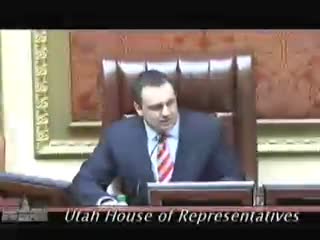
Utah House approves first substitute for minimum school program budget amid debate over cuts
Summary
The Utah House on Feb. 3 passed a first-substitute version of House Bill 1, the minimum school program base budget, 55–18 after floor debate over whether the measure amounts to deep cuts to public education. Sponsors said the substitute is a starting point and that one‑time federal funds will be addressed later in supplemental budgets.
The Utah House of Representatives passed the first substitute of House Bill 1, the minimum school program base budget, 55–18 on Feb. 3, 2010, moving the measure to the Senate for consideration. Sponsor Representative Newbold said the substitute restructures the budget by line items and represents 98 percent of the ongoing base budget while preserving a mechanism to address over‑ and underestimations.
The sponsor told the chamber the substitute changes how funding is appropriated, removes some non‑base language for later consideration and instructs distribution of charter school replacement and administrative dollars in cases of underestimation. He said the bill includes funding for an estimated 11,000 new students but funds them by reducing the value of the weighted pupil unit (WPU) from 25.77 to 24.87.
"We are funding new students but funding them by reducing the value of the weighted pupil unit," Representative Newbold said, describing the approach as a formatting and funding change that will allow the legislature to begin from a transparent base.
Members pressed for specifics on how the substitute would affect overall education funding. Representative Litvak asked whether the substitute would amount to a 12–15 percent cut if one‑time federal revenues were excluded; the sponsor and other members clarified that the base budget does not include roughly $300 million in one‑time backfill from federal sources and that the substitute itself represents about a 2 percent ongoing reduction (98 percent of base) while some descriptions of a 12–15 percent reduction conflate temporary backfills with ongoing appropriations.
Critics said the substitute could harm classroom conditions. Representative Mascaro described concerns relayed by a teacher: larger classes, reduced prep time and schools conserving electricity, and said he would not support the substitute unless the process restored funding. "For me to vote for this bill would say that the status quo is acceptable," Mascaro said, and he announced his opposition on those grounds.
Supporters urged colleagues to view the passage as the start of the process. Representative Moss said she had "faith in the process," noting the February revenue forecast and expected supplemental work, and said the substitute will be revisited as the session continues.
The House vote came after extended floor discussion and multiple members asking for clarifications on WPU counts and proportional distribution of growth dollars. Clerk records showed the substitute passed with 55 yes votes and 18 no votes and was transmitted to the Senate. Further changes to education funding were expected after the upcoming revenue forecast and in later budget reconciliation steps.
What happens next: The bill was referred to the Senate for consideration; sponsors and members said supplemental appropriation work and revisions are expected after the February revenue forecast.