Get Full Government Meeting Transcripts, Videos, & Alerts Forever!
Get email alerts on the Education Funding topic
No spam. Unsubscribe anytime.
Utah House approves accepting $100 million in federal EduJobs funds after heated debate over state authority
Summary
After a daylong debate over state sovereignty and fiscal principle, the Utah House passed HJR-201, a joint resolution approving acceptance of federal Education Jobs Fund dollars and asserting legislative appropriation authority. The measure passed 57–14 and was sent to the Senate.
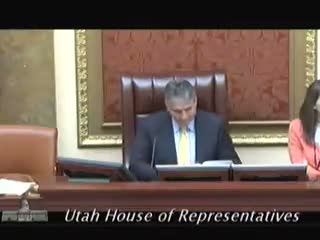
The Utah House of Representatives passed House Joint Resolution 201 on November 16, 2010, approving acceptance of federal Education Jobs Fund dollars and asserting the Legislature's role in appropriating sums over the statutory threshold. The resolution passed 57 yes to 14 no and was transmitted to the Senate for its consideration.
Representative Rebecca Lockhart, the House sponsor, told members HJR-201 was the statutory mechanism required for the governor to receive federal education funds and that the resolution also includes language expressing concern with how Washington issues grants. "HJR-201 is the resolution that is required by our state statute in order for the governor to receive the federal funds that were designated for Utah to receive from Congress," Lockhart said, and she described the provision as enabling the state to manage the dollars locally.
Opponents framed the vote as a matter of principle. Representative Sandstrom said he rose "in opposition to accepting these federal funds," arguing the recent national election signaled voter anger about federal spending and that Utah should "draw a line in the sand" and decline the money even if it could be used for education. Representative Herrod warned that new federal borrowing risks long-term inflation and said he would not "give my blessing to this money."
Supporters urged pragmatism and protection of classrooms. Representative Mascaro said the funds were "our money coming back home" and that the Legislature should exercise its authority to appropriate those dollars rather than cede the decision to third parties. Representative Anderson described the choice as between accepting the funds and ensuring they are appropriated by elected representatives or refusing and allowing others to determine their use.
Members also debated a first substitute to soften the bill's language. A representative moved to delete the original title and body and replace it with a first substitute described as "softening the message" and placing additional emphasis on directly helping students and teachers. That substitute failed after the House voted to keep the original text.
During the floor exchange, members raised fiscal figures and procedural points: lawmakers discussed the $10 million threshold in state statute that triggers legislative involvement, that EduJobs funds target teacher salaries and compensation, and that the amount at issue for Utah was commonly discussed as approximately $100,000,000. Representative Hansen questioned whether the message in the resolution could lead to federal funds being withheld; the sponsor responded she did not believe the federal government would stop sending the money.
The final roll call recorded 57 votes in favor and 14 opposed. Speaker announced the vote and that HJR-201 would be transmitted to the Senate. After the vote the House paused to hear brief farewell remarks from several departing or long-serving members.
The resolution as passed both authorizes acceptance of the federal education funds and sends an accompanying message to Washington about the Legislature's view of federal overreach; the Senate will now consider the measure.