Get Full Government Meeting Transcripts, Videos, & Alerts Forever!
Get email alerts on the Migrant Workers Programs topic
No spam. Unsubscribe anytime.
Utah House approves pilot migrant-worker program, creates 27-member commission
Summary
The Utah House voted 72-0 to pass House Bill 466, creating a 27-member commission and a one-year pilot with Nuevo León, Mexico, to request temporary nonimmigrant visas for seasonal workers; sponsors say the program uses federal visa processes and carries no fiscal impact.
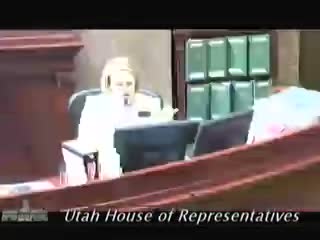
The Utah House on the floor on March 4 passed House Bill 466, the "Migrant Workers and Related Commission Amendments," by a vote of 72-0, sending the measure to the state Senate.
Sponsor Representative Sandstrom, speaking before the vote, said HB466 establishes a 27-member commission "to look at immigration issues, look at how we assimilate immigrants into our community" and to facilitate a legal seasonal-worker program. "The visa that will be given under this program is a nonimmigrant visa. It is not permanent. It has no path to citizenship," Sandstrom said on the House floor.
Sandstrom described the pilot as a one-year program with the state of Nuevo León, Mexico, and said Utah would partner with the U.S. Department of State. "Utah will not be issuing the visa. The visa will be issued by the United States of America, by the Department of State," he said, adding that the state would act as a "gatekeeper" requesting allocations and would use a memorandum of understanding to request visas.
The House adopted Amendment 2 (dated March 4), moved by Sandstrom, which adds a definition of "migrant worker" to the bill: "Means an individual who leaves the individual's country of origin for employment of a seasonal or temporary nature." The sponsor said the Attorney General's office will staff the commission and that members will serve as volunteers without per diem. "There is 0 fiscal impact," Sandstrom said in response to a member's question.
Floor supporters framed the bill as a pragmatic, bipartisan response to labor needs in rural industries. Representative Litvak said the measure "pulls together common ground" while working within federal immigration law. Representative Grover, who said he has worked with migrant families, said the bill would allow workers to "come out of the shadows" and return home at the end of seasonal work.
Representative Cox asked whether the pilot arrangement implicated the U.S. Constitution's restrictions on state treaties and compacts (Article I, Section 10). Sandstrom replied that the arrangement relies on federal visa authority: the State Department would issue visas and Utah would request allocations; the state would not itself issue visas.
With the amendment adopted and sponsor summation waived, the House proceeded under suspension of the rules for third reading and final passage. The clerk announced the final tally as 72 yes, 0 no, and that the bill will be transmitted to the Senate.
The House record notes that the pilot begins with Nuevo León and is designed to be expanded only after the pilot is deemed functional. The bill text, sponsor remarks, and the adopted amendment are reflected in the official floor proceedings recorded March 4.