Get Full Government Meeting Transcripts, Videos, & Alerts Forever!
Get email alerts on the Historic Districts topic
No spam. Unsubscribe anytime.
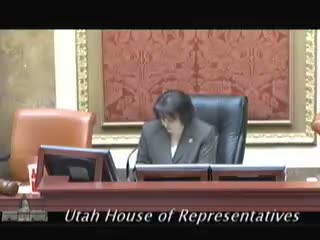
Utah House approves one-year moratorium on local historic districts after heated debate
Summary
After hours of debate over property rights and local control, the Utah House passed First Substitute Senate Bill 243, imposing a one-year moratorium on establishing some local historic districts; the vote was 50-22. Supporters said it provides a cooling-off period; opponents called it state overreach.
The Utah House passed First Substitute Senate Bill 243 on a 50-22 vote, approving a one-year moratorium intended to pause the establishment of certain local historic districts while residents and local officials work through disputes.
Representative Adam Harrod, the House sponsor, told members the measure is a compromise designed to give communities breathing room and cited the Utah Constitution’s protection of private property (Article I, Section 22) as central to the discussion. "It gives them a year to figure it out, and hopefully that we won't have to deal with it a year from now," Harrod said.
Opponents argued the bill represents an improper intrusion by the Legislature into neighborhood-level planning. Representative Briscoe, who said he will vote against SB243, described it as risking state micromanagement of local zoning and urged residents and city councils to resolve the issues locally. "I will be voting against SB243," he said.
Several members who supported the bill said it responds to residents who feel their local governments have failed to address grievances. Representative Wiley, who spoke in favor, said constituents reported their city "failed them" and that a temporary moratorium would level the playing field so parties could meet and negotiate.
Representative King, who declared a conflict of interest as a Yalecrest resident, emphasized that the debate was primarily about process, not whether any specific historic district should be created. Representatives on both sides noted the narrow geographic scope of the affected area — sponsor Harrod estimated about 1,400 homes could be involved — and cautioned about setting a broad legislative precedent for single-neighborhood disputes.
Supporters pointed to ongoing work by the Land Use Task Force and private groups addressing property-rights issues over the coming months; opponents said those broader policy efforts should precede legislative intervention. Representative Cox asked whether an interim study would be undertaken to create statewide guidance; sponsors and others replied that multiple groups were already working on related policy.
After Representative Wright moved the previous question to cut off debate, Harrod delivered a summation urging members to protect minority views and property rights by allowing a pause for local deliberation. The House then voted to pass the bill 50-22 and returned it to the Senate for further consideration.
The action affects state–local relations and land-use process but does not itself establish any specific historic district or ordinance. Next steps: the bill will be transmitted back to the Senate for any further action there.