Get Full Government Meeting Transcripts, Videos, & Alerts Forever!
Get email alerts on the Health Medicaid Reform topic
No spam. Unsubscribe anytime.
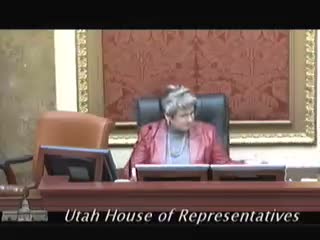
House approves Medicaid reform bill that would let state seek waivers to change payment model
Summary
The House passed the second substitute of Senate Bill 180 to allow the Utah Department of Health to pursue federal waivers shifting Medicaid from fee‑for‑service to risk‑based models and to create a Medicaid reserve; proponents project large savings if waivers are approved. Vote: 70–0.
The Utah House approved second substitute Senate Bill 180 on March 2, a sweeping measure intended to change Medicaid payment structures and establish a state reserve to buffer revenue fluctuations.
Representative Dougal moved to uncircle the bill; supporters described months of stakeholder work and broad backing from hospitals, business groups and consumer advocates. One sponsor told colleagues the bill would require the Health Department to propose a federal waiver to replace fee‑for‑service delivery with one or more risk‑based models, and would create a Medicaid reserve to help manage times of declining revenue.
On the floor, a sponsor summarized the potential fiscal impact: "the estimate was $770,000,000 of savings over 7 years, increasing further over time," if the state can accomplish the waiver and reform steps outlined. The sponsor also said the reforms are designed to address incentives in health care and the projected growth in Medicaid costs associated with federal reform.
A representative who works for a hospital company declared a conflict of interest for the record before the floor debate; the disclosure was noted on the record.
After brief committee amendment activity and floor discussion, the second substitute passed by voice and roll call with 70 yes votes and 0 no votes; the bill will be returned to the Senate, as amended.
What happens next: The Department of Health will be authorized to pursue federal waivers and to design risk‑based pilot models; implementation would depend on approval of federal waivers and subsequent administrative rules and contracting.