Get Full Government Meeting Transcripts, Videos, & Alerts Forever!
Get email alerts on the Online Education Program topic
No spam. Unsubscribe anytime.
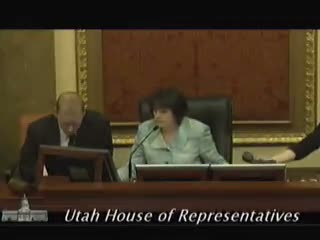
House approves statewide online‑education program after funding and transition amendments
Summary
The House passed First Substitute Senate Bill 65 on March 9, 2011 (48–27), creating a statewide online‑education framework that allows districts and charter schools to provide online courses. Lawmakers debated funding formulas, protections for the Electronic High School and a transition amendment that sets a $700 per‑class reimbursement and a 50/50 initial/completion payment model.
The Utah House on March 9 passed First Substitute Senate Bill 65, authorizing a statewide online‑education program that lets students take courses online from districts and charter schools and establishes a per‑class funding mechanism. The measure passed 48–27 after substantial debate and a floor amendment to ease the transition for the State’s Electronic High School.
Representative Daw, sponsor of the bill, framed online education as a teacher‑led model that “takes away the tyranny of the clock” and expands student access across the state. “Online education takes away the tyranny of location,” Daw said, arguing the model can give a Kanab student the same opportunity as a student in Orem.
Debate focused heavily on financing, provider eligibility and the fiscal impact. Representative Glass raised funding and accountability concerns and proposed Amendment 1 to preserve a one‑year transition for the Electronic High School and to clarify payment terms; the body adopted the amendment. Under the substitute and amendment language described on the floor, online providers (districts and charter schools) would receive $700 per class (a 0.77 factor in the substitute) and the bill establishes a model in which providers receive 50 percent of the payment at enrollment and the remaining 50 percent upon course completion.
Representative Menloft and others praised UtahFutures and the potential for online programming to expand opportunities in small and rural schools, while other members cautioned about the program’s cost and the need to protect existing public investments. Representative Glass and others asked whether private providers would be eligible; sponsors responded that the substitute removes direct private‑provider provision and channels funds only to districts and charter schools.
The House adopted the substitute and the amendment and passed the bill 48–27. Sponsors said further study and modeling will take place in the interim and that the Electronic High School will receive a one‑year transition to the new funding model.
Why it matters: The law creates a statewide funding and operational structure for online K‑12 education in Utah, potentially broadening course access for rural and urban students but raising questions about long‑term cost and procurement. The amendment preserved a transition pathway for the existing Electronic High School and restricted direct private‑provider payments, addressing key House concerns.
What happens next: The bill will be returned to the Senate for further consideration and will require interim modeling of fiscal impacts and program rules by the State Office of Education and legislative committees.