Get Full Government Meeting Transcripts, Videos, & Alerts Forever!
Get email alerts on the Election Law topic
No spam. Unsubscribe anytime.
House passes SB165 tightening rules on electronic signatures for petitions and candidate qualification
Summary
Second Substitute SB165 was approved 52-23 to clarify that electronic signatures will not qualify a candidate or petitions for ballot initiative/referendum use; sponsors cited cost and security concerns, opponents warned about restricting access.
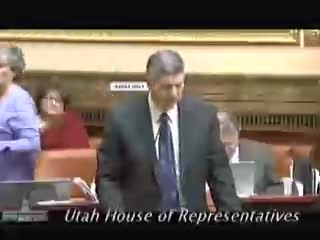
The Utah House on March 8 passed second substitute Senate Bill 165, a set of election-law clarifications that, among other changes, disallow electronic signatures to qualify a candidate for the ballot or to sign initiative and referendum petitions.
Representative Daw, the House sponsor, said the intent is to preserve the integrity of petitions and that secure electronic-signature systems are prohibitively expensive for county election administrators. She told members that requiring handwritten signatures is the "cheapest method" and would help ensure the signatures on petitions reflect real voters. The bill also includes measures that affect how late electronic registrations are handled and modifies petition-qualification thresholds to use presidential-vote turnout as a reference in some calculations.
Opponents warned the bill could make citizen initiatives harder and disproportionately affect rural voters who rely on online tools. Representative Chavez Houck referenced Anderson (a recent case she cited) and questioned whether the bill would conflict with existing case law and with electronic voter-registration practices. Representative Arendt, who teaches election law, criticized the bill as another step making initiatives more difficult to qualify for ballots and urged colleagues to oppose it.
After a brief call of the House to ensure quorums and a short roll call, the reading clerk announced that second substitute SB165 "passes this body with 52 yes votes, 23 no votes." The bill will be signed by the Speaker Pro Tem and returned to the Senate for action.
The floor debate centered on balancing access for voters and petitioners with election-integrity and administrative-cost concerns; the transcript does not include detailed technical specifications for any future electronic-signature system.