Get Full Government Meeting Transcripts, Videos, & Alerts Forever!
Get email alerts on the Healthcare Liability topic
No spam. Unsubscribe anytime.
House passes bill rolling back negligent-credentialing claims after heated debate
Summary
After hours of debate and a failed amendment, the Utah House passed Senate Bill 150 on March 8, 2011, limiting recognition of negligent-credentialing claims; the final vote was 54-20. An amendment to allow claims only for knowing or grossly reckless conduct failed 21-52.
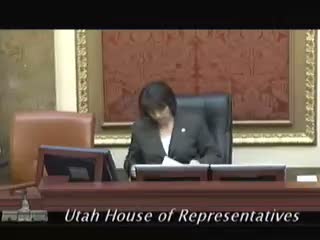
The Utah House of Representatives on March 8, 2011, passed Senate Bill 150, a measure addressing negligent credentialing by health-care facilities, after extended debate about whether the Legislature or courts should set the policy. The bill passed the House by a 54-20 vote and will be returned to the Senate for the President's signature.
Sponsor Representative Hughes framed the bill as a legislative response to a recent Utah Supreme Court decision, saying the court had "legislated from the bench" by recognizing negligent credentialing as a cause of action. Hughes told colleagues the bill "returns" policy-making authority to the Legislature and is supported by health-care organizations including the Utah Hospital Association and the Utah Medical Association.
Opponents raised patient-remedy and accountability concerns. Representative King urged rejection of the bill, saying it would "deprive those individuals from a remedy" and risk incentives that place profit over patient safety. Representative McKiff offered Amendment 2 to narrow recognition of negligent-credentialing claims to situations involving "knowing disregard or gross negligence constituting reckless disregard or failure to observe even slight care." McKiff said the change "strikes the middle ground" and cited Archuleta v. St. Lawrence Hospital and Article I, Section 11 of the Utah Constitution in support of preserving a limited remedy.
Supporters of the original bill argued the amendment would undermine its purpose. Representative Hughes said the amendment "guts this bill" and predicted it would increase litigation. Representative Gibson, who described his experience administering hospital credentialing, warned that broadening exposure tied to credentialing could invite frequent suits and disrupt hospitals' ability to manage risk.
The House cut off debate on the amendment with a successful motion for the previous question. The amendment failed on a recorded division vote of 21 yes to 52 no. The House then adopted Senate Bill 150 on final passage, 54 votes in favor and 20 opposed; the clerk recorded that the bill will be returned to the Senate for the President's signature.
The immediate effect of the bill is to restrict negligent-credentialing claims as written in the statute; proponents say it restores legislative policy while opponents say it removes an avenue for some injured patients to seek redress. The House debate repeatedly referenced statutory immunity language (discussants cited a provision identified in debate as "58-13-5") and the Archuleta decision, which several members described as the trigger for legislative action. The bill now proceeds to the Senate for final action there.