Get Full Government Meeting Transcripts, Videos, & Alerts Forever!
Get email alerts on the Public Roads Policy topic
No spam. Unsubscribe anytime.
House approves change in how roads become public after court rulings; owners must give clearer notice under HB173
Summary
House Bill 173 clarifies when a road becomes a public highway, responding to recent court rulings. The bill offers two alternative ways to show interruption of public use and passed the House 50–24 after amendment.
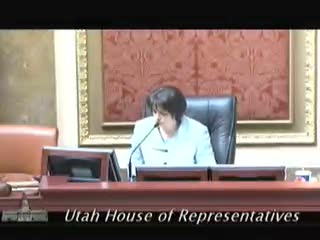
The Utah House of Representatives on Feb. 23, 2011, passed House Bill 173, legislation that changes the statutory standard for when a road is considered dedicated to public use and when it is abandoned.
Representative McKiff, the bill sponsor, told colleagues the legislation responds to a 2008 state Supreme Court decision and related case law that had altered how courts determine whether a landowner's acts interrupt public use. McKiff said the court's approach allowed a landowner to claim they 'intended to interrupt' without proof that the public was put on notice, making it difficult for counties or towns to rebut such claims in later disputes.
Under HB173, a claimant seeking to prove a landowner interrupted public use may do so in one of two ways: by showing actual interruption of use to a degree that reasonably notifies the traveling public, or by giving the relevant public body 72 hours' advance notice and manning a barricade for 24 hours. Representative Menlove moved Amendment No.2 (dated Feb. 22 at 02:03 p.m.) to correct citations and clarify language; the amendment passed on the floor and was incorporated in the bill.
Members pressed the sponsor on how the bill would affect long-established '2477' roads on federal lands and whether the new standard would impose an undue burden on private property owners who seek to protect their land. McKiff told members the bill is consistent with guidance from the Tenth Circuit and said counsel involved in defending 2477 roads reviewed the language. He also said the measure does not change existing law distinguishing private adverse-use rights from public road establishment.
Representative Powell and other members raised concerns that requiring a manned barricade and notice could create logistical burdens for property owners who have historically placed a chain or sign across a road; McKiff said the two approaches are alternatives and owners may use whichever is appropriate to their case.
After extended debate the House adopted Amendment No.2 and passed HB173 by a recorded vote of 50 yes to 24 no. The bill will be transmitted to the Senate for further consideration.
Representative McKiff said the change aims to make the adjudication of public-road claims more practical for counties and towns, not to strip private owners of rights. The bill's text as amended places an evidentiary structure into statute that courts can apply in resolving disputes over dedication and abandonment of roads.