Get Full Government Meeting Transcripts, Videos, & Alerts Forever!
Get email alerts on the Immigration topic
No spam. Unsubscribe anytime.
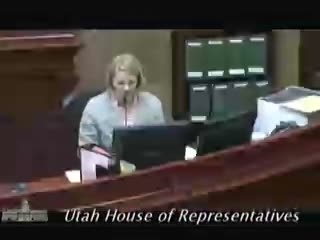
Utah House adopts immigration message resolution after amendment tightening language
Summary
The Utah House passed Senate Joint Resolution 12 on Feb. 23, 2011, sending a message urging federal action on immigration. Members debated constitutional authority and adopted an amendment that replaced the word “dominant” with “assumed” before approving the resolution 72‑2.
The Utah House on Feb. 23 passed Senate Joint Resolution 12, a message resolution urging the federal government to address immigration policy, after a floor amendment that softened language about federal authority.
Representative Wilcox, the House sponsor, said the resolution is part of a series of "message bills" meant to press Washington to act. "It's time for the federal government to address immigration," Wilcox said, arguing that long‑standing federal inaction has left states to cope with immigration‑related costs and policy gaps.
Representative Ivory proposed an amendment to replace the word "dominant" with "assumed" when referring to federal authority over immigration. Ivory said the change reflected constitutional concerns about judicial and federal power: "For us to suppose that constitutional powers to government come from a court is the very reason we are in the situation we are in today," he said.
Supporters and opponents debated whether the amendment better reflected settled law or appropriately signaled skepticism about federal reach. Representative King warned that longstanding Supreme Court interpretations have established federal authority, while Representative Cox argued the amendment accurately described how federal power has come to be exercised in practice.
After debate and several members speaking for and against, the House adopted Ivory's amendment and then approved the resolution as amended. The clerk reported the final vote as 72 yes and 2 no. The resolution will be returned to the Senate for further consideration.
The action was procedural (a nonbinding, message resolution) rather than a change to state statute; members framed the measure as urging federal action rather than imposing a new state policy.