Get Full Government Meeting Transcripts, Videos, & Alerts Forever!
Get email alerts on the Education Funding topic
No spam. Unsubscribe anytime.
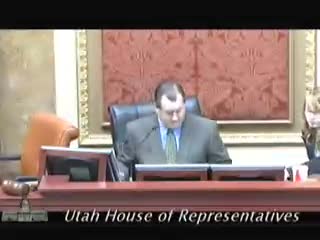
House approves overhaul of local school-property levies after extended debate over transparency and local control
Summary
House Bill 301 passed after extensive floor debate. The bill consolidates many local school-property tax levies into broader categories to give districts more flexibility; supporters called it simplification and local control while opponents warned of reduced transparency and potential tax impacts.
The Utah House of Representatives passed House Bill 301 on March 3, 2011, a measure that reorganizes and consolidates local school-property tax levies. The final recorded House vote was 39 yes to 31 no; the bill will be transmitted to the Senate for further consideration.
Sponsor Representative Newbold said the change reduces the number of local levies from 13 to 6 and will provide school districts greater flexibility in budgeting: "This bill will, by combining those down to 1 or 2, will put greater flexibility so that as the legislative level, you don't have to come every year and say, madam, may I," Newbold said, arguing the change reduces administrative friction and simplifies public presentation of tax lines on property bills.
Opponents, including several representatives and local superintendents, said consolidation could reduce transparency and narrow legislative tools for targeting specific programs. Representative Briscoe and others questioned limits on the recreation levy and whether some funds could be repurposed without clear voter consent. Representative Briscoe asked whether voters who approved bonds for specific projects could see those funds shifted under the new structure; the sponsor responded that the bill preserves debt service levies and certain caps.
Questions on fiscal impact and truth-in-taxation exemptions drew extended explanations on the floor. Representative Newbold emphasized that the bill does not automatically raise taxes and argued that district budgets and truth-in-taxation rules still constrain levies. Critics pointed to a fiscal-note figure that suggested districts could, in theory, raise substantial amounts under current caps and urged caution.
After lengthy Q&A on implementation details — including how the 10% of the basic program is treated, the mechanisms for truth-in-taxation exemptions, and protections for charter school funding — the House voted to approve HB301. Supporters called it a step toward local control and simpler public accounting; opponents warned it may make it easier to shift funds away from narrow, previously transparent categories.
Next steps: HB301 will be transmitted to the Senate. If the Senate concurs or modifies the bill, the legislature will reconcile differences before any final enactment or veto.